
By Foster Obi
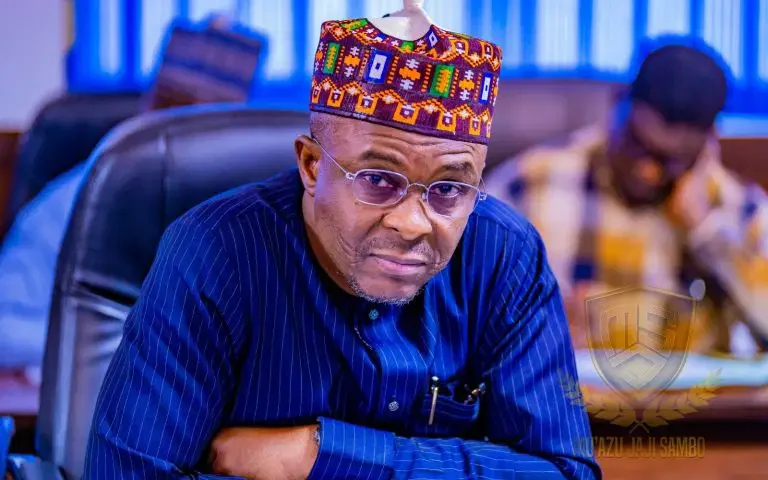
Picture: Dr Abubakar Dantsoho
With a string of national honours, global recognitions, and visible reforms across Nigeria’s port system, Managing Director of the Nigerian Ports Authority (NPA), Dr. Abubakar Dantsoho, is rapidly emerging as the poster boy of the country’s maritime resurgence. His leadership, marked by aggressive digitalisation, infrastructure upgrades, and a revival of long-neglected Eastern Ports, has repositioned the NPA as Nigeria’s most visibly transformed agency in recent years.
Over the last year, Dantsoho has become the most decorated public-sector CEO in the maritime domain, earning awards from respected national and global bodies. These include the NEAPS Award for Outstanding Public Sector Efficiency, international recognition from the International Association of Ports and Harbours (IAPH), a commendation from the Presidential Enabling Business Environment Council (PEBEC) for driving port-process reforms, and a regional excellence award from the Maritime Organisation of West and Central Africa (MOWCA).
Both the Vice President, Senator Kashim Shettima Mustapha, and the President, Bola Ahmed Tinubu, have also decorated him in public ceremonies, citing his leadership as a model for the administration’s reform agenda.
Industry stakeholders say these awards are not ceremonial but reflect measurable improvements in port performance, transparency, and technological adoption.
A cornerstone of Dantsoho’s tenure is the ongoing Port Modernisation Programme, widely regarded as the biggest coordinated upgrade of Nigeria’s port infrastructure in two decades. The programme has advanced critical rehabilitation of aged quay walls, expansion of berthing capacity, automation of terminal operations, modern security systems, and improved navigational infrastructure. These interventions, officials say, are already contributing to reduced vessel waiting times, improved cargo handling, and renewed investor confidence.
Parallel to the physical upgrades, the NPA under Dantsoho has mounted one of the strongest digitalisation drives in the agency’s history. This includes the rollout of the Port Community System (PCS), designed to integrate all port stakeholders on a single digital interface for real-time processing; collaboration on the National Single Window, which harmonises cargo clearance procedures; and the strengthening of the ETO electronic truck-call-up system, credited with reducing congestion and extortion around Apapa and Tin-Can port corridors. The call-up system is currently being replicated at Onne to ease traffic.
Stakeholders say these digital reforms have not only enhanced port efficiency but also curtailed manual bottlenecks long associated with corruption and delays.
One of Dantsoho’s most widely praised achievements is the revival of the Eastern Ports. For years, ports in Rivers, Onne, Calabar, and Warri suffered declining traffic due to poor infrastructure, insecurity, and shallow channels. Dantsoho’s administration, however, has driven targeted investments in dredging, channel management, security enhancement, and stakeholder engagement.
As a result, Rivers Port is seeing its highest vessel calls in years, Onne has consolidated its position as the nation’s leading oil and gas logistics hub, Calabar is recording gradual activity revival, and Warri is regaining relevance.
Maritime analysts say this shift is easing the historical over-dependence on Lagos ports and unlocking regional economic opportunities, while also repositioning Nigeria’s influence in the global shipping map.
Beyond physical and digital reforms, Dantsoho has also overseen internal restructuring at the NPA, including transparent procurement processes, merit-driven leadership appointments, stronger collaboration with Customs, terminal operators, and shipping companies, and improved relations with the Maritime Workers Union. Staff morale, according to agency insiders, has risen significantly, supported by clearer performance metrics and better welfare initiatives.
Across the industry, the consensus is that the NPA has regained its footing and direction. With multiple national and international recognitions, visible infrastructure renewal, and technological reforms gaining traction, Dantsoho has emerged not only as a standout administrator but also as a symbol of what committed leadership can deliver in the public sector.
For many observers, the awards from NEAPS, IAPH, PEBEC, MOWCA, and the Presidential Villa simply underscore one reality: under Abubakar Dantsoho, Nigeria’s ports are being rebuilt, modernised, and repositioned for global competitiveness.

