
By Foster Obi
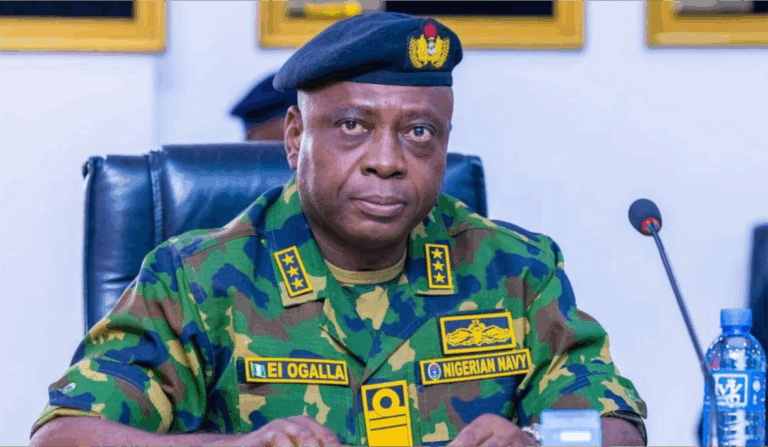
As Vice Admiral Emmanuel Ikechukwu Ogalla took his final salute at the Nigerian Navy Ship (NNS) Quorra in Apapa on Thursday, his departure marked the end of a tenure defined by intensified operations against crude oil theft, piracy, and other maritime crimes, threats that have long bled Nigeria’s economy and stained its standing in the Gulf of Guinea.
Speaking at his departure parade, the immediate past Chief of the Naval Staff (CNS) credited the Navy’s improved maritime security outcomes to “strengthened operations and the dedication of its personnel,” urging the service to consolidate the gains recorded in recent years. Under his watch, the Navy prioritised practical, intelligence-driven measures aimed at denying criminals freedom of action at sea and along Nigeria’s vast coastline.
That focus, Ogalla said, yielded “greater security in the maritime domain and the Gulf of Guinea as a whole,” a claim that aligns with the steady decline in reported piracy incidents and increased interdictions of illegal refining sites and crude-laden vessels within Nigeria’s waters. More than hardware or platforms, he emphasised the commitment of officers and ratings across all ranks as the engine of progress.
Ogalla’s exit comes at a moment when the fight against oil theft has again seized public attention following the interception by United States authorities of a supertanker, MV Skipper, over alleged crude oil theft. The Nigerian Maritime Administration and Safety Agency (NIMASA) has since denied reports suggesting the vessel was Nigerian-flagged, stressing that it does not sail under Nigeria’s registry.
While that clarification is significant, maritime experts insist it should not breed complacency. Oil theft is a transnational crime, and Nigeria, by virtue of its production volumes and strategic location remains a prime target. The episode underscores the need for sustained vigilance, intelligence-sharing, and coordinated action between the Nigerian Navy, NIMASA, and international partners, regardless of a vessel’s flag.
During Ogalla’s tenure, the Navy deepened cooperation with sister agencies and private security partners, tightened patrols in critical corridors, and sustained presence in Nigeria’s territorial waters and Exclusive Economic Zone. These efforts contributed to Nigeria’s improved reputation in the Gulf of Guinea, once labelled the world’s piracy capital.
Yet consolidation, as the outgoing CNS advised, is now the real test. Criminal networks adapt quickly, exploiting legal loopholes, weak inter-agency coordination, and economic pressures in coastal communities. Sustaining the gains will require continued investment in platforms, maritime domain awareness, personnel welfare, and robust prosecution of offenders to break the cycle of arrest-and-release.
As Vice Admiral Ogalla passes the baton, his legacy is one of operational momentum and renewed confidence within the Navy. The charge to his successors is clear: hold the line, deepen reforms, and ensure that Nigeria’s waters and the wider Gulf of Guinea do not relapse into insecurity. The fight against oil theft and maritime crime is far from over, but the foundations laid must not be allowed to erode.

