NSA Ribadu’s FOREST GUARD revolution: Turning Point in Nigeria’s WAR AGAINST INSECURITY

By Amah Alphonsus Amaonye

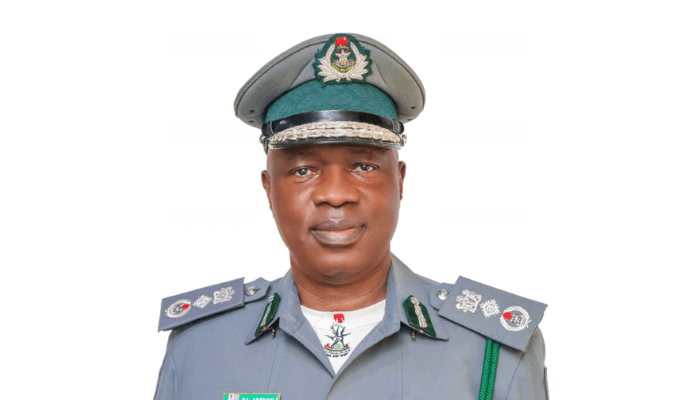
Picture: National Security Adviser (NSA), Malam Nuhu Ribadu


Nigeria may finally be on the path to defeating terrorism, banditry, and kidnapping — and the credit, according to security analysts, will go a long way to the strategic brilliance and uncommon resolve of the National Security Adviser (NSA), Malam Nuhu Ribadu.
“The president gave the directive, and the NSA took charge, driving an uncommon revolution that will stem the tide of terrorism, kidnapping, banditry, and related criminality in the country by training and deploying officers of the Nigerian Forest Security Service Special Guard,” said a security expert.
In an exclusive interview with AWC, globally recognised peace advocate and intelligence expert, Amb. Dr. John Metchie, declared that the Nigeria Forest Security Service Special Guard Initiative championed by the NSA is “the missing link that Nigeria has waited for… the panacea to recurring insecurity.”
“Ribadu Has Found the Missing Link”: Metchie Praises NSA’s Security Blueprint
Amb. Dr. Metchie, a newly certified Executive Master in Security Management & Leadership from the London College of Management and Leadership Education, said the NSA’s approach reflects the highest form of global security intelligence.
“The gap in Nigeria’s security architecture has always been the absence of a professional forest security system. Ribadu has closed that gap,” he said.
“His deployment strategy is the most robust intervention Nigeria has seen in two decades.”
According to Metchie, who is also DCG Intelligence of the Nigerian Forest Security Service (NFSS), the NSA has successfully transformed President Bola Ahmed Tinubu’s directive on forest guards into a national offensive against criminals hiding in Nigeria’s vast forest belts.
Forest Guards: International Best Practice — Nigeria Finally Joins Global Standards
According to the security expert, countries such as:
Brazil (Amazon Forest Police)
India (Forest Rangers & Jungle Warfare Units)
South Africa (Field Rangers)
United States (U.S. Forest Service Patrol)
It has long relied on trained forest guards to combat illegal mining, poaching, terrorism, drug operations, and forest-based militias.
Metchie said Nigeria’s adoption of the same model is long overdue.
“Forests are always a potential breeding ground of terrorism. If you do not dominate the forests, you cannot defeat criminals,” he said.
“The NSA has now taken over that domain — that is why this menace will stop in a matter of months.”
748 Officers Trained — A Technical Milestone in Nigeria
The Office of the NSA recently graduated 748 Special Guard officers from Taraba State after completing advanced tactical drills in the Osun State training ground.
AWC gathered that the drills included:
Jungle warfare & bush-combat training
Anti-kidnap rapid response
Night infiltration & silent movement tactics
Weapons handling & survival operations
Counter-ambush formation and forest navigation
Drone-assisted surveillance training
Metchie said the strategic choice of Osun is symbolic as the area “provides full concentration away from daily distractions” and allows high-impact training similar to global forest-security academies.
Enugu Leads States’ Commitment — 1,000 Guards Set for Deployment
As at the time of filing this report, Enugu State is finalising arrangements to train 1,000 recruits under the NSA Forest Security Service Guard Initiative, joining other subnational governments to massively embrace the programme under Governor Peter Mbah.
Metchie urged all 36 states and FCT to follow suit:
“If every state keys in, insecurity will be defeated faster than expected. The forest guard INITIATIVE IS the game changer.”
Ribadu’s Masterstroke: Federal–State Collaboration
For a long time in Nigeria’s security history, the NSA has created a Special Guard Initiative based on:
Unified training standards
Joint operations doctrine
Shared intelligence frameworks
Co-funded deployment mechanisms between the NSA and state governments.
Metchie described this as “revolutionary”, adding that:
“It is the strongest collaborative security architecture Nigeria has ever implemented. This is how you reclaim ungoverned spaces in all parts of the country.”
Tinubu’s Role: A President Who Broke Historical Barriers
Metchie, who had initiated several functional community security schemes, reserved special commendations for President Tinubu for:
Approving the establishment of the Nigerian Forest Security Service Special Guard
Empowering the NSA with full operational authority
Recently appointed General Christopher Musa (rtd.) as Minister of Defense — “a round peg in a round hole”
According to him:
“No President before Tinubu had the political will to establish a specialised forest guard service. Tinubu did it. Nigeria will benefit from this bold leadership.”
Why the Forest Guard Initiative Will Work — Metchie’s Intelligence Breakdown
1. Nigeria’s forests cover over 9 million hectares — mostly ungoverned
Bandits, herdsmen militias, terrorist cells, illegal miners, and kidnappers have used these forests for more than a decade.
2. Conventional police cannot dominate forests
Traditional policing is urban-based; forests require specialised tactical units. While efforts are committed to expanding Nigeria’s policing capacity, the immediate intervention needed in the country now is robust training, equipping, and deployment of motivated men of the NSA Forest Security Service Special Guard, said Metchie.
3. Ribadu’s forest guards are trained precisely for this terrain
Their training mirrors international models used against guerrilla networks. The men are tactically trained for Forest security operations.
4. Technology-backed operations will seal the success
Drones, satellite tracking, and night-operation units are already being integrated, going by available information.
“At This Pace, Nigeria Will Win the War Against Terror” — Metchie
The intelligence expert told AWC:
“If this momentum is sustained, the war against terror will be won in a matter of months.”
“The training and equipping happening now has never been seen in Nigeria. Ribadu is rewriting the security narrative.”
He emphasised that the journey to start reclaiming Nigeria’s forests, once strongholds of criminal kingdoms has begun in earnest.
A New Dawn in Nigeria’s Security Architecture
The NSA’s Forest Guard Initiative is fast becoming the defining security reform of the decade.
With: Professional training
Bold federal directives
Strong state collaboration
Legislative support emerging
And presidential backing
Nigeria is finally taking the fight to the roots of insecurity — the forests.
Metchie concluded:
“This is the Renewed Hope in action. Ribadu has turned presidential instruction into operational manifestation. Nigeria will become safer and safer by sustaining this initiative.”
AWC will continue to monitor the deployment, state participation, and operational outcomes of the Nigerian Forest Security Service Special Guard Initiative of the NSA as it evolves.
Amah Alphonsus Amaonye is Director-General, African Writers Centre (AWC)

Dantsoho emerges as Poster Boy of Nigeria’s Maritime reforms

By Foster Obi

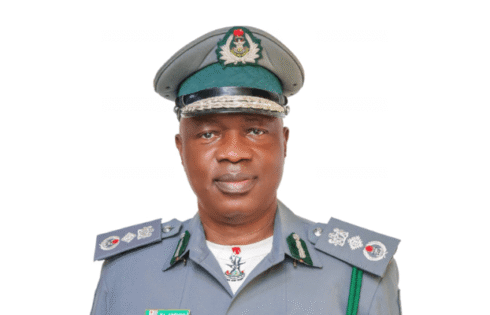
Picture: Dr Abubakar Dantsoho


With a string of national honours, global recognitions, and visible reforms across Nigeria’s port system, Managing Director of the Nigerian Ports Authority (NPA), Dr. Abubakar Dantsoho, is rapidly emerging as the poster boy of the country’s maritime resurgence. His leadership, marked by aggressive digitalisation, infrastructure upgrades, and a revival of long-neglected Eastern Ports, has repositioned the NPA as Nigeria’s most visibly transformed agency in recent years.

Over the last year, Dantsoho has become the most decorated public-sector CEO in the maritime domain, earning awards from respected national and global bodies. These include the NEAPS Award for Outstanding Public Sector Efficiency, international recognition from the International Association of Ports and Harbours (IAPH), a commendation from the Presidential Enabling Business Environment Council (PEBEC) for driving port-process reforms, and a regional excellence award from the Maritime Organisation of West and Central Africa (MOWCA).

Both the Vice President, Senator Kashim Shettima Mustapha, and the President, Bola Ahmed Tinubu, have also decorated him in public ceremonies, citing his leadership as a model for the administration’s reform agenda.

Industry stakeholders say these awards are not ceremonial but reflect measurable improvements in port performance, transparency, and technological adoption.

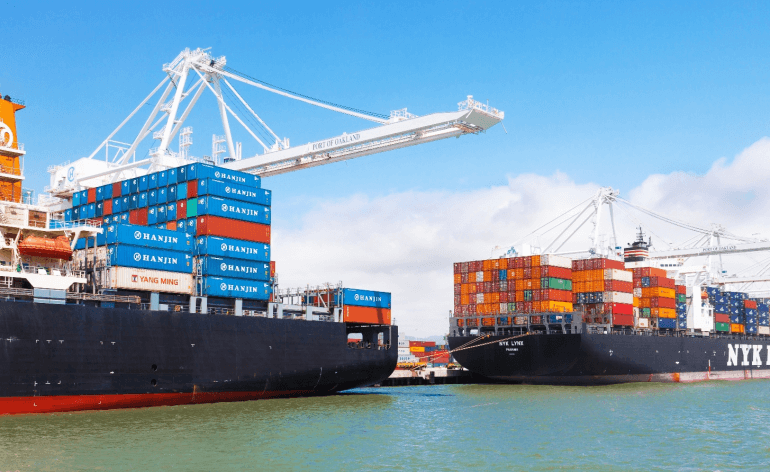
A cornerstone of Dantsoho’s tenure is the ongoing Port Modernisation Programme, widely regarded as the biggest coordinated upgrade of Nigeria’s port infrastructure in two decades. The programme has advanced critical rehabilitation of aged quay walls, expansion of berthing capacity, automation of terminal operations, modern security systems, and improved navigational infrastructure. These interventions, officials say, are already contributing to reduced vessel waiting times, improved cargo handling, and renewed investor confidence.

Parallel to the physical upgrades, the NPA under Dantsoho has mounted one of the strongest digitalisation drives in the agency’s history. This includes the rollout of the Port Community System (PCS), designed to integrate all port stakeholders on a single digital interface for real-time processing; collaboration on the National Single Window, which harmonises cargo clearance procedures; and the strengthening of the ETO electronic truck-call-up system, credited with reducing congestion and extortion around Apapa and Tin-Can port corridors. The call-up system is currently being replicated at Onne to ease traffic.

Stakeholders say these digital reforms have not only enhanced port efficiency but also curtailed manual bottlenecks long associated with corruption and delays.

One of Dantsoho’s most widely praised achievements is the revival of the Eastern Ports. For years, ports in Rivers, Onne, Calabar, and Warri suffered declining traffic due to poor infrastructure, insecurity, and shallow channels. Dantsoho’s administration, however, has driven targeted investments in dredging, channel management, security enhancement, and stakeholder engagement.

As a result, Rivers Port is seeing its highest vessel calls in years, Onne has consolidated its position as the nation’s leading oil and gas logistics hub, Calabar is recording gradual activity revival, and Warri is regaining relevance.

Maritime analysts say this shift is easing the historical over-dependence on Lagos ports and unlocking regional economic opportunities, while also repositioning Nigeria’s influence in the global shipping map.

Beyond physical and digital reforms, Dantsoho has also overseen internal restructuring at the NPA, including transparent procurement processes, merit-driven leadership appointments, stronger collaboration with Customs, terminal operators, and shipping companies, and improved relations with the Maritime Workers Union. Staff morale, according to agency insiders, has risen significantly, supported by clearer performance metrics and better welfare initiatives.

Across the industry, the consensus is that the NPA has regained its footing and direction. With multiple national and international recognitions, visible infrastructure renewal, and technological reforms gaining traction, Dantsoho has emerged not only as a standout administrator but also as a symbol of what committed leadership can deliver in the public sector.

For many observers, the awards from NEAPS, IAPH, PEBEC, MOWCA, and the Presidential Villa simply underscore one reality: under Abubakar Dantsoho, Nigeria’s ports are being rebuilt, modernised, and repositioned for global competitiveness.

Gov Otti to Nigerian Elites: “Think Beyond Individual Success”


….Recounts Harvard turning point

… Warns that National failure overshadows personal achievements


By Foster Obi


Abia State Governor, Dr. Alex Otti, has urged Nigeria’s elite, professionals, and business leaders to rethink their definition of success, insisting that individual achievements amount to little when the wider society remains trapped in underdevelopment.

Speaking at the 2025 Dinner and Award Ceremony of the Harvard Business School Association of Nigeria (HBSAN) in Lagos on Saturday, the governor said that a personal epiphany he had at Harvard in 2009 reshaped his philosophy of leadership and drove his eventual foray into politics.

He issued a clarion call to Nigeria’s educated and affluent class to abandon what he described as “the illusion of isolated success,” arguing that the country’s persistent failure in basic governance, despite its pool of brilliant individuals, remains a global embarrassment.

Otti, addressing a hall of Harvard Business School alumni, said he was shaken years ago when a foreign course mate asked why Nigerians shine globally as individuals but fail collectively as a nation.

“How do you explain the paradox of very successful people coming from a country that is everything but successful?” he recalled his colleague asking. Why are we failing at even the most basic matters of civilisation?”

The governor said the question haunted him throughout his stay in Boston and forced him to confront Nigeria’s contradictions, including the neglect of public institutions, the absence of basic services, and an elite class disconnected from governance.

The governor argued that Nigeria’s brightest minds have historically abandoned public service for private-sector comfort, allowing “barely educated” individuals to dictate national outcomes.

“While we were at Harvard, Cambridge, MIT and Oxford topping the result charts, barely educated individuals were taking decisions that influence how the world sees Nigeria,” he declared.

He said the country’s reputation abroad is not shaped by the brilliance of its citizens but by poor governance metrics emanating from home.

Otti narrated how the Boston experience convinced him to return to Abia to help rebuild collapsing infrastructure, dysfunctional systems, and a culture of impunity.

He recounted his rocky political journey, from his first gubernatorial attempt in 2015 through two unsuccessful contests, to finally emerging victorious in 2023 after what he described as attempts to “scuttle and steal” the people’s mandate.

“If we could do it, who says you can’t. This is not for the fainthearted. You must be prepared to fight very tough battles,” Governor Otti urged his listeners.

Highlighting progress under his 30-month administration, Otti said Abia has moved from crippling insecurity and urban decay to becoming one of Nigeria’s safest states with a steadily improving infrastructure footprint.

He cited cleaner cities, a revived road network, strengthened institutions, and new standards in education, health, land administration and public transportation.

“The evidence of Abia’s ascent can be found in the streets of Aba where order has replaced chaos,” he noted.

The governor added that his reforms have been driven not by abundant resources but by prudent management, including cutting governance costs and deploying civil servants into technical project roles.

Otti also announced new measures to empower graduates and professionals, including: commencement of payment of ₦60 billion gratuity arrears dating back to 2001;

business grants for graduates of Ogbonnaya Onu Polytechnic; over ₦150 million already disbursed to young entrepreneurs; and a rise in state IGR from ₦20 billion to ₦100 billion annually.

He credited his administration’s progress to a meticulous team-selection process that prioritises competence, character, and what he called “community-above-self” value.

The governor warned Nigeria’s privileged class against detaching from public affairs, quoting Plato and Bertolt Brecht on the dangers of political apathy.

He said the COVID-19 pandemic proved that personal wealth cannot shield anyone from systemic collapse. “Some of the wealth we accumulate becomes irritants when we are faced with existential threats,” he said.

Otti urged Harvard alumni and other professionals to participate meaningfully in politics and governance, saying Nigeria’s future depends on collective, not individualistic interpretations of success.

The governor ended his address by reaffirming his belief that Nigeria can only rise when its most enlightened citizens decide to engage, lead, and reform their communities.

Picture: Governor Alex Otti


Nigeria Maritime industry 2025: Progress amid persistent bottlenecks

By Foster Obi

As the year gradually draws to a close, it is good to note that despite Nigeria securing a seat at the International Maritime Organization (IMO) Council under Category C and announcing several reforms in 2025, the country’s maritime sector continues to battle congestion, corruption, and underperformance. Analysts warn that while security and regulatory initiatives show promise, systemic inefficiencies across ports, Customs, shipping companies, and terminal operators are still costing the nation billions of dollars annually.
Nigeria’s maritime industry in 2025 stands at a crossroads. The creation of the Ministry of Marine and Blue Economy has brought renewed focus, while the Deep Blue maritime security project has improved coastal safety and international confidence. Nigeria’s victory in securing a Category C seat at the IMO Council positions the country as a stakeholder in global maritime governance.
Yet, ports remain congested, customs clearance is slow and costly, and terminal operators continue to impose arbitrary charges. Indigenous shipping companies still struggle to access finance, despite new guidelines for the Cabotage Vessel Financing Fund (CVFF). The absence of a national shipping line continues to undermine trade competitiveness.
How the Ministry/Agencies Stand:

MINISTRY OF MARINE & BLUE ECONOMY
Performance: The Ministry launched national policy engagement, convened international forums.
Non-performance: Slow delivery of actionable plans; poor coordination with agencies.
Recommendations:Publish a 12-month operational plan with KPIs; quarterly progress reports.
2026 Projection: Coordinated PPPs and policy-driven initiatives if reforms are implemented.

NIGERIA PORTS AUTHORITY (NPA)
Performance: Incremental infrastructure works and digitization pilots. A strong reform drive with port modernization, ETO traffic management, the national single window, and new export-processing terminals repositioning Nigerian ports for efficiency, competitiveness, and foreign investment. Efforts to reposition eastern ports are hailed by analysts. National Single Window, a “game-changer” expected to reduce human interference and strengthen cargo clearance efficiency.
Non-performance: Terminal congestion persists; port-community integration is weak.
Recommendations: Fast-track a unified Port Community System (PCS); improve port access corridors.
2026 Projection: Partial PCS rollout could reduce dwell times by 10–20%.

NIGERIAN MARITIME ADMINISTRATION AND SAFETY AGENCY (NIMASA)
Performance: The Deep Blue project improved maritime security; CVFF operationalisation.
Non-performance: Weak enforcement of Cabotage; slow ship registry growth.
Recommendations: Publish transparent CVFF disbursement schedule; incentivize Nigerian-flagged vessels.
2026 Projection: First indigenous vessels may be financed if CVFF works effectively.

NIGERIA CUSTOMS SERVICE (NCS)

Performance: Revenue targets exceeded; scanners partially deployed.
Non-performance: Systemic extortion, multiple checkpoints, discretionary valuations, and slow clearance remain major bottlenecks.
Recommendations: Moratorium on informal checkpoints; enforce scanner-first, risk-based clearance; create a fast lane for compliant agents.
2026 Projection: Clearance times can improve significantly if reforms are enforced.

NIGERIAN INLAND  WATERWAYS AUTHORITY (NIWA)
Performance: Mapping of waterways; private-sector engagement initiatives.
Non-performance: Uncoordinated dredging; safety enforcement is weak.
Recommendations: National inland waterways masterplan; PPP pilot river terminals.
2026 Projection: Modest modal shift for freight corridors if pilots succeed.

NIGERIA SHIPPERS’ COUNCIL (NSC)
Performance: Advocacy, complaint handling, watchdog role.
Non-performance: Limited enforcement power; slow dispute resolution.
Recommendations: Cap terminal surcharges; online tariff dispute forum.
2026 Projection: Improved transparency; reduced arbitrary charges if empowered.

SHIPPING COMPANIES

Performance: Reliable liner connectivity.
Non-performance: Arbitrary surcharges, weak local content compliance; extortion collusion allegations.
Recommendations: Enforce transparent tariffs; link terminal access to compliance scores.
2026 Projection: Costs may reduce if regulators generate the needed muscle to enforce transparency and compliance.

TERMINAL OPERATORS
Performance: Investment in equipment and partial automation.
Non-performance: High storage charges; manipulation of delivery orders; underinvestment in hinterland capacity. No corporate social responsibility(CSR). Zero-sum game. Winner takes all mentality.
Recommendations: Standardise Terminal Delivery Orders(TDO) processes; tie concession renewal to performance KPIs. Enforce CSR operations or give back to the country of operations.
2026 Projection: Terminals adopting transparency are likely to gain market share.

FREIGHT FORWARDERS/AGENTS

Performance: Facilitation role and advocacy.
Non-performance: Fragmentation; occasional corruption; presence of unlicensed operators.
Recommendations: Strengthen licensing; mandatory professional certification.
2026 Projection: Professionalisation can reduce clearance delays and corruption.

MARITIME WORKERS UNION (MWUN)
Performance: Defends workforce rights; reduced informal labour practices. Smooth leadership transition.
Non-performance: Strikes and resistance to automation.
Recommendations: Sectoral automation roadmap with reskilling fund and incentives.
2026 Projection: Labour–management accords possible if the transition fund is implemented.

ACROSS-BOARD RECOMMENDATIONS:
Launch one-data portal: quarterly national maritime KPIs (dwell time, registry tonnage, CVFF progress).
Fastrack Single Window operations.
Enforce PCS and CVFF transparency.
Use the IMO Category C seat to attract technical support and capacity-building
ng programs.
Aggressively combat illegal checkpoints and extortion in port corridors.

NPA lists major reforms, says “Sanity has returned to Ports” as Onyemekara reviews 2025


By Foster Obi

The Nigerian Ports Authority (NPA) says the maritime industry is experiencing its strongest reform drive in decades, with port modernization, ETO traffic management, the national single window, and new export-processing terminals repositioning Nigerian ports for efficiency, competitiveness, and foreign investment.

Speaking in Lagos, the General Manager, Corporate and Strategic Communications of the NPA, Ikechukwu Onyemekara, said the authority’s transformation is already visible across operations, infrastructure, and staff welfare, adding that stakeholders should expect “fresh air in 2026.”

Onyemekara dismissed suggestions that the NPA is still “planning” multimodalism, insisting it is already an existing operational framework.

“Every port system we operate works on the platform of multimodalism. The roads are better, waterways and barge operations are active, and consignees have multiple options to move cargo,” he said.

Responding to concerns from barge operators who claim their business is declining, he stated that cargo movement is an open market.

“Our responsibility is to provide infrastructure. Operators need to make their mode of transport attractive. Consignees choose what works best for them,” he added.

The NPA spokesperson described 2025 as one of the most transformative years in the authority’s recent history, crediting the Managing Director, the Minister of Marine and Blue Economy, and President Bola Tinubu for “bold policies unseen in many years.”

He listed port modernization as the biggest milestone. “The shipping world has changed. Bigger vessels with modern technology are coming. To attract them, our ports must be modernized. This government was bold enough to take that step,” he said.

He also highlighted the National Single Window, describing it as a “game-changer” that will reduce human interference and strengthen cargo clearance efficiency.

Looking ahead, Onyemekara predicted stronger performance in exports, tied to new Export Processing Terminals (EPTs) and efficiency reforms initiated by NPA management.

“Export figures are rising daily because of operational efficiency. In 2026, Nigeria will breathe fresh air in the maritime industry,” he assured.

On the NPA Managing Director’s recent international appointment, he said the honour will deepen investor confidence. “It brings greater respect from the international community. Foreign investors want to see signs that they will get returns on investment, and this government has created the right environment,” he said.

On the rising activity in Eastern ports, Onyemekara said better infrastructure and improved security now give consignees confidence to route cargo outside Lagos.

“In the past, people were unsure of infrastructure and security in those regions. Today, government investments have fixed that. Consignees now have the freedom to send cargo anywhere,” he said.

He described the successful rollout of the ETO electronic traffic call-up system as one of NPA’s most impactful innovations.

“Before ETO, businesses collapsed in Apapa and residents moved out. Sanity has returned. We replicated the same in Onne to avoid a repeat of past problems,” he said.

On staff welfare, Onyemekara said the workforce is more motivated than in previous years, citing rapid promotions, training, and better retirement processes. “Promotions that were stagnated for years have been cleared. Our officers are internationally trained, consistently trained, and celebrated anywhere in the world,” he noted.

He praised the synergy with the Nigerian Customs Service and agencies under the Marine and Blue Economy Ministry.

“We have a minister who believes in teamwork. Sitting, planning, and working together has removed barriers and strengthened collaboration,” he said.

Despite the progress, he said stakeholder impatience remains a major challenge.

“Some stakeholders want results immediately. We only ask for patience. We operate under authority and must get proper approvals to implement policies,” he concluded.

50 Drivers of the Blue Economy’: MARAN launches historic publication honouring Maritime Leaders


Picture: The book “50 Drivers of the Marine and Blue Economy’, smoking hot 

The Maritime Reporters Association of Nigeria (MARAN) unveiled a landmark publication yesterday, celebrating individuals and institutions that shape the country’s maritime and blue economy landscape.

The new book, titled “Fifty Drivers of the Nigerian Marine and Blue Economy,” was launched in Lagos on Thursday, marking a major milestone in documenting the nation’s maritime evolution. The event, themed “Driving the Blue Agenda: Recognizing Champions Steering Nigeria’s Marine Economy,” brought together industry stakeholders to honour innovators and reformers driving growth across the sector.

Chairman of the launch and former Minister of Interior, Capt. Emmanuel Ihenacho, described Nigeria’s maritime industry as a “vital component” of the national economy. He emphasized that, with proper harnessing, the sector has immense potential for economic growth and national development.

Ihenacho also acknowledged the foundational contributions of past and present maritime leaders, tracing the sector’s evolution from the establishment of the National Shipping Line in 1959 to the birth of NIMASA in 2007.

“The book launch theme is carefully chosen to spotlight the individuals, institutions, and innovations driving the country’s Marine and Blue Economy,” he said.

Executive Secretary of the Nigerian Shippers’ Council (NSC), Dr. Pius Ukeyima Akutah, who was represented by Assistant Director of Operations, Mrs. Juliana Saka, described the publication as a significant milestone. He applauded MARAN for demonstrating vision and professionalism by documenting the contributions of key players in the sector.

“The marine and blue economy offers vast opportunities requiring collaboration, innovation, data, and accountability. MARAN’s work strengthens public understanding, celebrates behind-the-scenes contributors, and elevates discourse shaping policy, investment, infrastructure, and sustainable maritime development.” Akutah said.

Also speaking, former NSC Executive Secretary, Mr. Hassan Bello in his goodwill message, described the celebration as timely, given the sector’s over 60 years of steady progress. He noted that Nigeria’s maritime economy remains central to national growth.

“All generations must unite to support and preserve the sector, honour past contributors, and work together for continued success,” he said.

In her review of the publication, former SERVICOM General Manager at the Nigerian Ports Authority (NPA), Mrs. Carol Ufere, said the book offers research-driven insights into ministries, agencies, industry leaders, reforms, and policy directions shaping Nigeria’s blue economy. She highlighted its focus on governance, innovation, digitalisation, security architecture, and institutional strengthening.

According to her, the chapters examine the Nigerian Maritime Administration and Safety Agency (NIMASA), NPA, National Inland Waterways Authority (NIWA), Nigeria Customs Service, Nigerian Railway Authority, and other critical institutions, while showcasing achievements, challenges, and reforms needed to enhance competitiveness and sustainability.

Speaking earlier in his opening speech, MARAN’s Caretaker Committee Chairman, Mr. Tunde Ayodele, said the launch was organised to honour individuals and institutions whose service and vision have shaped Nigeria’s maritime trajectory. He noted that the publication not only documents their contributions but also reinforces ongoing efforts to advance the marine and blue economy.

Ayodele described the launch as a historic moment for the maritime media community and the broader sector, expressing appreciation to all who attended.

“Developed through extensive research, the book highlights outstanding leaders, private organisations, and agencies whose collective efforts drive reforms, innovation, and sectoral growth,” he said. “This first edition also recognises emerging talents and future contributors to the industry,” Ayodele said.

Picture: Former Interior Minister Captain Emmanuel Iheanacho unveils the book as MARAN Caretaker Committee Chairman Tunde Ayodele in green and former ES Nigeria Shippers Council Barrister Hassan Bello in Blue watch.

SAHARA Group deepens reforestation drive with GELEGELE FOREST RESERVE PARTNERSHIP 


Sahara Group has expanded its environmental sustainability agenda through a strategic partnership between its flagship Adopt-A-Forest Initiative and the Gelegele Forest Reserve in Edo State, Nigeria. The collaboration, which begins with the planting of 20,000 tree seedlings, aims to regenerate degraded areas of the reserve and reinforce Sahara’s long-term commitment to nature-based climate action.
The project launch featured engagements with the Edo State Forestry Commission and the Gelegele Forest Reserve Board, underscoring Sahara Group’s collaborative approach to restoring ecosystems, safeguarding biodiversity, and promoting sustainable livelihoods within host communities.
Launched in 2023, the Adopt-A-Forest Initiative is one of Sahara Group’s foremost climate action programmes designed to restore degraded landscapes, conserve Africa’s natural carbon sinks, and strengthen resilience against climate change. By 2024, the initiative had successfully expanded across Nigeria, Cameroon, Kenya, Tanzania, Ghana, and Dubai, with further projects planned in Ghana, Côte d’Ivoire, and Kenya in 2025.
Ejiro Gray, Director of Governance and Sustainability at Sahara Group, described the initiative as a key driver of Sahara’s vision for a greener and more sustainable future.
The Adopt-A-Forest Initiative is more than a tree-planting program; it is aimed at driving the environmental sustainability of our natural carbon sinks. We recognize this God-given gift as vital to managing emissions, sequestering carbon, and ensuring that Africa’s lungs continue to sustain the planet.”
Also speaking at the launch, Babatomiwa Adesida, Head of Business Support, Asharami Energy (a Sahara Group company), said the project reflects the Group’s integrated approach to sustainability.
“At Asharami Energy, sustainability is at the core of our business. Our support for the Adopt-A-Forest Initiative reflects our shared responsibility to regenerate the environment and protect biodiversity”, he said. “Every tree planted represents a step toward reversing decades of degradation and rebuilding hope.”
Hon. Asuen Valentine, Chairman, Edo State Forestry Commission, commended Sahara Group for its forward-looking intervention.
“The best time to plant a tree was years ago; the second-best time is now. We are grateful to Sahara Group for championing the Adopt-A-Forest Initiative and commend this visionary effort that will go a long way in restoring our forests and preserving them for future generations.”
Speaking further on the initiative, Gray reaffirmed Sahara’s resolve to continue driving climate leadership across its operations in Africa, Asia, Europe, and the Middle East.
“This work is necessary and non-negotiable,” she added. “We must continuously strike the right balance between preserving our natural forests and biodiversity and driving sustainable development for all.”
The Adopt-A-Forest Initiative remains a cornerstone of Sahara Group’s climate action strategy, integrating nature-based solutions, resource efficiency, and stakeholder collaboration to ensure Africa continues to “breathe” through its forests, the continent’s most vital gift to the world.

Picture: Fourth from left: Babatomiwa Adesida, Head, Business Support, Asharami Energy; Hon. Valentine Owamagbe Asuen, Chairman Edo State Forestry Commission; Ejiro Gray, Director, Governance and Sustainability, Sahara Group, and other executives from the two organisations during the launch of reforestation drive with Gelegele Forest Reserve partnership under Adopt-A-Forest initiative in Edo State, Nigeria recently.

Maritime editors, stakeholders, citizens blast Sanwo-Olu’s port monopoly mindset

By Foster Obi

The maritime community in Nigeria has erupted in a chorus of condemnation following a statement attributed to Lagos State Governor Babajide Sanwo-Olu, decrying the Nigerian Ports Authority (NPA)’s efforts to deepen and operationalise ports in the South-South and South-East, including Warri Port Complex, Onne Port Complex and Calabar Port as part of broader plans to ease chronic congestion in Lagos.

The League of Maritime Editors (LOME), led by its President, Mrs Remi Itie, and Secretary-General, Mr Felix Kumuyi, described the governor’s remarks as “a demonstration of obsession with Lagos dominance” and a direct affront to the notion of equitable national development. As the League puts it: “Nigeria is a federation, not a fiefdom.”

Their critique underscores two decades of over-concentration in the port sector, mainly at the country’s two major Lagos ports, Apapa Port and Tin Can Island Port which have long borne the brunt of traffic congestion, corruption, inefficiency and incessant gridlock. According to LOME, efforts to bolster and diversify port operations across Nigeria are not only justified, they are imperative.

“To now resist the decentralisation of port operations to Warri, Onne or Calabar is to insist that Nigeria’s economy remain shackled to Lagos’ dysfunction,” the League argued.

The criticism from LOME aligns with growing frustration among shipping professionals and freight operators. It comes amid a flurry of remarks by Lagos officials rejecting NPA’s decision to shift focus from Lagos to other ports.

A senior aide to the governor, Adekoya Hassan, the Senior Special Assistant on Transportation and Logistics told reporters that the “problem lies not in Lagos ports themselves but in long-standing policy flaws within NPA.” He argued that reckless attempts to divert cargo to Warri amount to a “band-aid” that ignores the real sources of inefficiency: toll-points, a malfunctioning e-call-up system, favouritism, racketeering and abuse of power by senior officials.

According to Hassan, if NPA reformed its institutional framework and aligned with modern economic realities, congestion at Apapa could be drastically reduced, making the pivot to Warri unnecessary.

Yet, many maritime stakeholders vehemently disagree with the Lagos Government’s stance. Among them is the aide to the governor of Delta State, Ossai Success, who described the opposition to the shift as “disappointing.” He insisted the decision to revive Warri and by extension reduce reliance on Lagos is in the best interest of Nigeria, arguing it would spur regional economic development, reduce logistics costs for businesses, ease congestion in Lagos and improve security and surveillance across ports.

Meanwhile, the NPA itself and other proponents of maritime reform have pointed to concrete progress at previously moribund ports. In a recent working tour of the Delta ports, the NPA Chairman and board members disclosed ongoing investments in dredging, channel maintenance, and infrastructure upgrades at Warri, Onne and Calabar, with pledges to continue modernisation across the maritime sector.

These developments are seen not as “band-aids,” but as urgent corrective measures meant to rebalance port operations, relieve Lagos of unsustainable load, and provide the country with a resilient, multipolar maritime network.

Beyond institutional voices, several merchants, truckers and citizens, many of whom spoke anonymously for fear of reprisal dismissed the Lagos State Government’s claim to be the engine of national commerce.

An influential trucker at Apapa, who asked to remain unnamed, said: “We spend days waiting at every checkpoint, paying bribes, even when our call-up number shows green. If Warri or Onne are functioning properly, why should I continue suffering here?”

An Eastern-based importer noted: “When you have to bring cargo from abroad and it’s easier to discharge in Lagos, thousands of naira are wasted on transport, demurrage and extortion. A working port in Warri or Calabar means lower cost not just for me, but for every Nigerian buying imported goods.”

Patrick Ige, a Lagos resident living near the port corridor said the perennial gridlock had become a public safety and environmental hazard: “Trucks parked for hours, sometimes overnight. Noise. Pollution. Accidents. We’ve written to the State, but the only answer is more promises, not solutions.”

Viewed in the full context of Nigeria’s maritime and economic realities, the Lagos Government’s position now appears less like a defence of competence and more like a bid to preserve economic monopoly. Several factors underscore this critique:Persistent failure to resolve Apapa gridlock despite years of state-infrastructure investments and repeated assurances of improvement. Even as late as November 2025, the State still points to “policy flaws at NPA” as root causes.

Pointing to decentralization as a “distraction” or “band-aid,” while ignoring decades of centralised congestion, corruption, and inefficiency.

Ignoring regional equity, economic justice, and the potential for national integration, by resisting the development of other viable ports, especially in the South-South and South-East.

Pitting Lagos’ narrow local interest against Nigeria’s broader national good. In effect, Sanwo-Olu’s rhetoric betrays a dangerous vision where one state monopolises commerce and sidelines other regions, a notion incompatible with genuine federalism and balanced national growth.

Analysts posit that the efforts by the NPA to revive and deepen operations at Warri, Onne, Calabar, and other ports should not be viewed as a threat to Lagos but as a strategic necessity for the whole country. They believe that resistance from Lagos, cloaked in complaints about “policy flaws,” is increasingly revealed as resistance to reform.

Picture: Lagos State Governor, Babajide Sanwo-Olu


Abians commend Gov. Otti’s bold visit to Mazi Kanu, urge continuous advocacy for justice

By Foster Obi


Abia residents have lauded Governor Alex Otti for his recent visit to Mazi Nnamdi Kanu, leader of the Indigenous People of Biafra (IPOB), at the Sokoto Correctional Centre, describing the action as courageous and reflective of his commitment to justice, peace, and the welfare of the Igbo nation.

Mazi Nnamdi Kanu, an Abia-born activist advocating against the perceived marginalization of the Igbo in Nigeria, has remained in detention and jailed by the government despite repeated pleas for his release. Governor Otti, in a gesture praised across the state, visited Kanu to encourage him and to reassure him that efforts to secure his pardon from the federal government, led by President Bola Ahmed Tinubu, have been sustained and intensified.

Residents expressed pride in the governor’s proactive engagement. Mrs. Uju Okoro, a school teacher in Umuahia, said, “Governor Otti is showing leadership beyond politics. He stands for justice and the people’s voice. We are proud that someone from Abia is taking such bold steps for the Igbo cause.”

Chijioke Eze, a trader in Aba, added, “It is inspiring to see a governor who balances state development with national advocacy. Governor Otti’s intervention gives hope that dialogue and peaceful resolution are possible even in sensitive matters.”

Young entrepreneur Ikechukwu Okali said, “This visit shows that our leaders can act courageously, bridging local governance with national responsibility. Governor Otti is setting an example for others to follow.”

The official press release from the governor’s office, signed by Ferdinand Ekeoma, Special Adviser to Governor Otti on Media and Publicity, noted that during the visit, Otti encouraged Kanu to remain calm and strong, assuring him that administrative measures are in place for his eventual release.

Governor Otti, while discussing with Mazi Kanu, assured him that the engagements he started over two years ago, which the IPOB leader has been aware of, have been intensified in spite of what happened.

Governor Otti expressed joy that the Sultan of Sokoto is on the same page with him on the need for Kanu’s freedom and de-escalation of tension, and informed Mazi Kanu that the Sultan of Sokoto had on a lighter note told him that Kanu is now his subject and he was going to Turbane him, an information that got the IPOB Leader laughing loudly.

Responding, Mazi Kanu, who was beaming with smiles and in high spirits, thanked Governor Otti for the visit and stated that he wasn’t surprised that the Governor quickly came visiting because he had done the same thing in the past.

He told the Governor that he is very proud of his giant strides in Abia based on the feedback he gets from home about the state since he assumed office, a feat he said is replicating what Late Dee Sam Mbakwe did as Governor of Old Imo State which has kept him permanently immortalised, and called on the Governor to continue to serve the people diligently.

Governor Otti was accompanied on the visit by the Attorney General and Commissioner for Justice, Mr. Ikechukwu Uwanna, SAN, the Special Adviser to the Governor on Media and Publicity, Ferdinand Ekeoma, and some top Sokoto State government officials, including Commissioners and advisers.

Also present during the visit was Kanu’s younger brother, Prince Emmanuel Kanu.

Governor Otti’s visit highlights his ongoing efforts to mediate for Kanu’s release, reflecting a commitment to justice and national cohesion while continuing to drive socio-economic development in Abia. His administration insists that engagement, dialogue, and advocacy remain central to addressing sensitive national issues.


MARAN set to unveil book honouring Drivers of Nigeria’s Marine and Blue Economy


The Maritime Reporters Association of Nigeria (MARAN) has concluded all arrangements for the public presentation of its authoritative new book, “50 Drivers of Nigeria’s Marine and Blue Economy,” scheduled to hold on Thursday, December 4, 2025, at The Providence Hotel, Ikeja GRA, Lagos, by 12 noon.

The publication, produced after extensive sectoral research, chronicles the contributions of key personalities whose ideas, reforms, and interventions have significantly shaped Nigeria’s maritime and blue economy landscape in recent years.

Speaking ahead of the event, the Chairman of the Caretaker Committee of MARAN, Mr. Jayeolatunde Ayodele, said the book represents a bold step by the association to document and spotlight excellence within the industry.

“This publication is MARAN’s unbiased and carefully researched contribution to strengthening institutional memory within the maritime sector. At a time when Nigeria is repositioning its Marine and Blue Economy architecture, it has become critical to recognise individuals whose efforts have driven growth, reforms, and innovation,” Ayodele stated.

“Our goal is to provide a credible reference material that will guide policymakers, industry practitioners, researchers, and students. We believe this documentation will also inspire accountability and encourage a culture of service within the industry.”

Ayodele added that MARAN remains committed to its mandate of deepening industry reportage, promoting transparency, and providing intellectual resources that contribute to national development.

This Thursday’s event will feature notable personalities, including the former Minister of Interior and Chairman of Integrated Oil & Gas, Capt. Emmanuel Iheanacho, who will serve as Chairman of the Occasion; Chief (Mrs.) Carol Ufere, former General Manager, SERVICOM, NPA, who will review the book; and the Minister of Marine and Blue Economy, Adegboyega Oyetola, CON, who will attend as the Special Guest of Honour.

Chairman of the Planning Committee, Mr. Kenneth Jukpor, also expressed confidence that the event will further strengthen collaboration among maritime stakeholders and stimulate broader conversations around Nigeria’s blue economy opportunities.