
MAN tasks FG on productive use of fuel tariffs

MAN logo manufacturers Association of NigeriaThe Manufacturers Association of Nigeria has urged the Federal Government to reinvest proceeds from the newly approved 15 per cent import tariff on petrol and diesel into energy infrastructure, refinery efficiency, and power support schemes for industries.

The association described the policy as a patriotic and strategic step that aligns with its advocacy for the patronage of Made-in-Nigeria products and the ‘Nigeria First’ industrial agenda.

Director-General of MAN, Segun Ajayi-Kadir, said in a statement on Wednesday that the tariff imposition was a “sure step toward strengthening local value addition, domestic refining capacity, conserving foreign exchange, and advancing Nigeria’s long-term industrialisation objectives.”

He said, “The 15 per cent tariff is a deliberately designed policy instrument intended to protect and encourage domestic producers, curb dumping, and create a stable environment for local refiners to thrive.”

Ajayi-Kadir noted that the policy had reassured manufacturers that the government was attentive to the need to grow indigenous industries, adding that it would accelerate the operational readiness of local refineries and stabilise energy supply to industries.

He added, “We call for transparent, efficient, and well-coordinated implementation to ensure that its benefits reach both industry and consumers, safeguard competitiveness, and prevent unintended cost burdens.”

MAN urged the government to ensure transparent price monitoring through regulators such as the Nigerian Midstream and Downstream Petroleum Regulatory Authority and the Federal Competition and Consumer Protection Commission to prevent excessive mark-ups and anti-competitive behaviour.

It also called for a stable transition period, especially during the festive season, to support local refiners and prevent fuel supply shocks or speculative hoarding.

Ajayi-Kadir further advised the government to reinvest tariff revenues in energy and refinery infrastructure, provide credit facilities for industrial energy transition, and create incentives for small and medium manufacturers that rely on diesel-powered generators.

He also urged the government to privatise non-functional refineries to stop the “commitment of scarce financial resources to an evidently irredeemable venture.”

The MAN boss stated, “This tariff is a vital step in achieving energy independence and industrial sustainability, both of which are prerequisites for Nigeria’s economic transformation. We believe it will accelerate the country’s journey toward energy sovereignty, industrial competitiveness, and sustainable economic growth anchored on the strength of Made-in-Nigeria.”

An earlier policy brief by the Centre for the Promotion of Private Enterprise corroborates MAN’s position. Director of the CPPE, Dr Muda Yusuf, also described the 15 per cent import duty on refined petroleum products as a “progressive and corrective policy measure” that would promote strategic protectionism and strengthen Nigeria’s productive base.

Yusuf said, “The policy represents a positive step toward safeguarding domestic and emerging industries while building competitiveness and self-sufficiency. Sectors that enjoyed measured protection, such as cement, flour, and beverages, have recorded remarkable growth and value addition.”

The CPPE chief noted that the tariff will conserve foreign exchange, support local refineries such as the Dangote Refinery and modular operators, and reduce exposure to external shocks.

He added that, for the policy to succeed, government must complement it with low-cost financing, reliable energy supply, infrastructure investment, and streamlined regulations to improve domestic efficiency and ensure long-term consumer benefits.

Yusuf noted, “No country has industrialised through unrestrained exposure to imports. Protectionism, when pragmatic and disciplined, is not about closing borders; it is about building domestic strength for global competitiveness.”

Oando suspends petrol imports as Dangote raises output

Oando PlcOando Plc says it has suspended petrol importation into the country as the commencement of domestic fuel supply by the Dangote Refinery continues to disrupt Nigeria’s downstream market, leading to a 20 per cent fall in its trading revenue.
In its H1 and nine-month 2025 financial reports, the energy company said its trading segment faced headwinds that exerted pressure on both the entity’s revenue and the group’s topline, following the decline in Premium Motor Spirit imports into the country due to rising local refining capacity.

“Our trading segment faced headwinds which exerted pressure on the entity’s revenue and the Group’s topline as a result of declining PMS imports into the country due to rising local refining capacity from the Dangote refinery, a positive development that enhances Nigeria’s energy security and self-sufficiency,” the company said in its H1 report.

It explained that in response to the changing environment, it diversified crude offtake sources, optimised trade flows, and expanded into new commodities like liquefied natural gas to cushion the impact of lost PMS volumes.

“In response, we diversified our crude offtake sources, optimised trade flows, and expanded into LNG and metals. These initiatives are already gaining traction and will support stronger performance in H1,” Oando stated.

According to the 9M report, revenue declined by 20 per cent year-on-year to N2.5tn in the first nine months of 2025, compared with N3.2tn in the same period of 2024. The company attributed the fall primarily to a reduction in gasoline imports following the ramp-up of the Dangote refinery, though this was partly offset by stronger upstream contributions.

“Revenue declined by 20 per cent year-on-year to N2.5tn (9M 2024: N3.2tn), primarily due to a reduction in gasoline imports following the ramp-up of the Dangote refinery, which has positively transformed Nigeria’s refined-product supply landscape, partly offset by stronger upstream contributions,” the firm noted.

Gross profit also decreased by 42 per cent to N113bn compared to N194bn in the same period last year. The decline was in line with the topline contraction and changing segment mix, Oando reported.

However, the company recorded a sharp rise in net earnings during the period under review.

“Profit after tax increased by 164 per cent to N210bn (9M 2024: N76bn), driven by stronger production volumes and legacy recoveries,” it said.

Across its trading business, Oando acknowledged that refined product volumes remained under pressure largely due to the success of the Dangote refinery in meeting Nigeria’s fuel needs.

“Across our trading business, refined products volumes remained under pressure, largely due to the well-deserved and expected success of the Dangote refinery in meeting Nigeria’s import needs. Consequently, our focus had shifted to expanding global crude exports and leveraging structured pre-export transactions, an area in which we have continued to record robust success,” it stated.

During the review period, Oando said it maintained progress in crude trading while deliberately pausing PMS activities in response to the structural shift in the domestic market.

“In 9M 2025, the Trading Division continued to execute its strategic priorities despite persistent market volatility. A total of 21 crude oil cargoes (19.8 million barrels) were traded during the period, up from 15 cargoes (16.7 MMbbl) in 9M 2024, reflecting sustained momentum under Project Gazelle and stronger crude trading performance,” it said.

Conversely, it was added that “the vision made a conscious strategic decision to pause PMS trading activities during the period, recognising the structural shift in Nigeria’s downstream market following the full commencement of domestic supply from the Dangote refinery.”

It added, “With the refinery now fulfilling its intended role in supporting national product availability, Oando has redirected its focus towards higher-margin crude and gas trading opportunities, while continuing to evaluate re-entry into the refined-product segment as market dynamics stabilise.

Looking ahead, Oando said it would focus on strengthening crude trade flows and expanding into gas and metals.

“The focus going forward is on deepening operational resilience and optimising existing crude trade flows, supported by the development of offtake-linked financing structures to unlock incremental volumes and strengthen margins. In parallel, the division is advancing plans to diversify into gas and metals trading, aligning with the group’s broader strategy to build a balanced, future-ready energy portfolio and deliver sustained long-term value,” the report stated.

The Dangote refinery, which began production in 2024, has since become a dominant player in Nigeria’s fuel market. With a capacity of 650,000 barrels per day, the plant said it now supplies much of the nation’s petrol and diesel needs, significantly cutting the country’s dependence on imported products.

Last week, the Federal Government introduced a 15 per cent import duty on petrol and diesel to discourage cheap fuel imports and protect local refineries.

The policy is aimed at consolidating domestic refining gains and stabilising the market amid Dangote’s rapid scale-up.

Analysts said the new tariff, coupled with the refinery’s growing output, would eventually price importers out of the market.

NNPC to feed P’Harcourt refinery’s stranded power to grid

NNPCLGenesis Energy Limited and the Nigerian National Petroleum Company Limited have announced plans to supply excess power generated from the Port Harcourt Refining Company to the national grid.
The partnership, unveiled during an official visit by the Minister of Power, Chief Adebayo Adelabu, to Genesis Energy’s operational site within the Port Harcourt Refinery in Eleme, Rivers State, is aimed at improving grid stability, expanding electricity access, and advancing Nigeria’s energy transition goals.

Genesis Energy said in a statement that it operates the nation’s largest licensed private off-grid clean power plant, an 84-megawatt facility that supplies sustainable energy to the Port Harcourt refinery, which is currently dormant due to an ongoing technical review.

Recall that the power minister has recently lamented that Nigeria had over 10,000 megawatts of power locked in idle plants across the nation.

According to Adelabu, the Port Harcourt refinery could only use 20 MW out of its current capacity, leaving over 60 MW stranded.

Under the new arrangement, Genesis Energy and NNPC will work together to channel the refinery’s excess or stranded power to the national grid in line with the Federal Government’s Power Sector Reform and Energy Transition Agenda.

Speaking during the visit, Adelabu commended Genesis Energy’s operational excellence and reaffirmed the Federal Government’s support for private-sector investment in the power industry.

“We have over 10 gigawatts of stranded generation capacity in Nigeria today. We have energy being generated or capacity being installed all over the country that cannot be evacuated because of transmission and distribution bottlenecks,” the minister said.

He added, “We are ready to do everything possible to attract investors to support us so that industries, businesses, and households can have uninterrupted, functional, and reliable electricity. This collaboration will serve as proof of concept for integrating excess capacity into the national grid and could lead to an additional 120 megawatts once the pilot phase is concluded.”

Adelabu further assured that the government would fast-track transmission infrastructure and commercial arrangements to enable seamless evacuation of power from the facility to the grid.

The Chairman and Chief Executive Officer of Genesis Energy Group, Mr Akinwole Omoboriowo, said the partnership with NNPC underscored the company’s commitment to leveraging clean energy solutions for national development.

“At Genesis Energy, we remain committed to powering progress through strategic partnerships that strengthen Nigeria’s energy infrastructure and expand access to reliable power. This collaboration with NNPC Ltd. exemplifies pragmatic innovation, leveraging existing assets to expand energy access, enhance refinery productivity, and contribute to national development,” Omoboriowo stated.

He added that the initiative would create jobs, support industries, and power local communities, while reinforcing Nigeria’s journey toward a cleaner and more sustainable energy future.

Genesis Energy said it would continue to work with the Federal Government, financiers, and other stakeholders to promote industrial growth, advance the just energy transition, and strengthen national grid reliability.

“The 84 MW off-grid independent power plant operated by Genesis Energy, located within the Port Harcourt Refining Company, stands as the nation’s largest licensed private off-grid clean power plant and the company’s pioneering clean energy investments in the country.

”The facility, powered by three GE TM2500+ gas turbines, supplies uninterrupted, sustainable power directly to the refinery, improving operational efficiency, strengthening local energy security, and reducing dependence on diesel and grid instability. The PHRC IPP also exemplifies how gas-to-power acts as a strategic enabler for renewable energy deployment, with every 1 MW of gas-to-power capacity creating potential for up to 2 MWp of solar power investment, thereby supporting Nigeria’s Just Energy Transition and climate resilience agenda,” the statement added.

Stop exporting crude, OPEC tells Nigerian producers

OPECThe Chairman of the OPEC Board of Governors for 2025 has called on Nigerian oil producers to prioritise domestic refining and value creation instead of exporting raw crude.

Speaking on Wednesday at the Nigerian Association of Petroleum Explorationists Pre-Conference Workshop in Lagos, Adeyemi-Bero, who is also the Chief Executive Officer of First Exploration & Petroleum Development Company, said the country must move away from decades of crude exports and focus on retaining value within the local economy.

He said, “We’ve been an oil and gas exporting country. We produced oil; once there was oil, we put it in a tank and sent it abroad. 40 or 50 years later, people blame Shell and others, but I don’t. They are businesses looking for feedstock for their industrialisation. If you give it to them, they’ll still take it.”

Adeyemi-Bero argued that Nigeria had a responsibility to develop its energy resources locally and use them to drive industrial growth, rather than depend on foreign markets.

According to him, President Bola Tinubu would have returned fuel subsidies if the Dangote refinery had not been there to produce fuel locally.

”Just look at the impact the Dangote refinery has had on foreign exchange and gross domestic product growth. You can imagine if that had happened 50 years ago. If the president had said, ‘I’m cancelling subsidies, and I’m not going to allow multiple exchange rates,’ and we didn’t have the option of having petroleum products in this country, I’m sure he would have changed his policies and gone back to subsidies. It’s as simple as that. Let’s not over-aggregate.

This message is saying, We need to decline exports,” Adeyemi-Bero said.

He spoke further that, “If you go to Saudi Arabia today, if you go to the UAE, if you go to Qatar, if you go to Malaysia, if you go to Brazil, they are expanding the value chain and keeping it in their space. Now, one man built a refinery; we fought him, we argued with him. But the impact of that Dangote refinery on our GDP and foreign exchange is big.”

He added that local refining and crude utilisation would also help stabilise the naira and strengthen the nation’s economy.

“If we can sell some oil in naira, let’s do it if it works for both parties. The strength of the naira is what it commands in trade. This is why nobody wants the naira outside this space, but the day you can pay for oil in naira because both parties agree, it strengthens the naira,” he said.

Adeyemi-Bero stressed that Nigeria must deliberately reduce its dependence on exports and focus on value creation to avoid future economic decline.

“We need to decline exports. All of us like to sell, but the person that will buy from us will be willing to buy at the right price. ‘I’m investing in dollars, so don’t come and buy in naira. If I invest in dollars, then pay me in dollars.’ But we could make that happen,” he stated.

He warned that failure to change course could be costly, saying, “We need to shift from being export-driven to value-driven. If we don’t do this over the next decade, we have failed.”

The OPEC Governor also called for renewed commitment among local operators, noting that international oil companies had already played their part.

“The internationals have done their bit. But I do think that God also decided to hand over to Nigerians. ‘They’ve started it; now let me give it to the owners to make it happen,” he said.

Adeyemi-Bero emphasised that the oil and gas sector remained central to achieving the country’s economic aspirations, including its $1tn economy target.

“Nigeria wants to be a $1tn economy. Let’s not worry about where we are today. Is it possible? Yes. Who is going to make it possible? We have a responsibility, probably the primary responsibility, to drive that energy. Energy access and security is a must,” he declared.

He further noted that energy-led growth was essential for national development, saying, “The oil and gas sector can enable that to happen. Because without electricity, without fuel, the economy is not going to grow. So we have a responsibility.”

Adeyemi-Bero urged industry players to take ownership of Nigeria’s energy future, stressing, “The baton has been placed in our hands. We can have oil and gas like the UAE, Saudi Arabia, or Qatar, small nations punching their weight through their resources. We must use ours to step up as a country.”

Earlier in his welcome remarks, the President of the Nigerian Association of Petroleum Explorationists, Mr Johnbosco Uche, said the pre-conference workshop was a vital part of the association’s annual conference and a platform for industry leaders to deliberate on critical sector issues.

Uche explained that this year’s conference theme, ‘Revitalising the Nigerian Petroleum Exploration and Production Strategies for Energy Security and Sustainable Development’, reflected the urgency of the times and the need for collective industry action.

He said the country must work to increase production to meet its national target while ensuring long-term sustainability.

“In the near term, we need to increase production. The country is pushing to hit the three million barrels per day target. We have to push it to that three million target. But most importantly, sustaining that production is also key,” Uche stated.

The NAPE president underscored the role of explorers in achieving this objective, adding that maintaining technical excellence was vital for the industry’s survival.

First HoldCo posts N450.9bn profit in nine months

First HoldCo PlcFirst HoldCo Plc has reported a profit after tax of N450.9bn for the nine months ended 30 September 2025.
According to the group’s unaudited financial statement filed with the Nigerian Exchange Limited, the figure represents a 15.5 per cent decline from the N533.9bn profit recorded in the same period of 2024.

First HoldCo’s gross earnings rose by 17.1 per cent year-on-year to N2.63tn from N2.25tn in September 2024, driven by interest income, which rose to N2.29tn in the nine months of 2025 from N1.63tn in the corresponding period of 2024, representing a 40.4 per cent increase. However, interest expense climbed to N791.8bn from N759.1bn, while impairment charges for losses rose to N288.9bn from N171.4bn in the previous year.

The group’s fee and commission income grew to N260.5bn from N205.3bn. First HoldCo also recorded a net foreign exchange gain of N71.9bn, a recovery from a loss of N226.7bn posted a year earlier.

Profit before tax for the group stood at N566.5bn, down from N610.9bn in the corresponding period of 2024.

Similarly, the group’s total comprehensive income declined to N335.1bn from N848.8bn reported in the previous year, while earnings per share dropped to N10.65 from N14.64 in 2024.

Commenting on the development, the Group Managing Director of First HoldCo, Adebowale Oyedeji, said, “FirstHoldCo has once again shown solid earnings capabilities. The Group posted a strong financial performance over the period, with interest income and operating income growing by 40.4 per cent and 23.2 per cent year-on-year, respectively. The robust performance of the core business was supported by a 26.9 per cent rise in gross fees and commission income. Consequently, gross earnings reached N2.6tn, marking a 17.1 per cent year-on-year increase.

“The decline in profit before tax is directly attributable to the normalisation of fair value gains and measures implemented to strengthen the balance sheet for the long term. Our strategic risk management initiatives are already yielding positive results, as evidenced by an improvement in the non-performing loan ratio to 8.5 per cent, and we are on track to exit the forbearance regime by year-end.”

Speaking on the ongoing recapitalisation, Oyedeji said, “Regarding the recapitalisation of FirstBank, the first phase of our private placement capital raise has been successfully executed. Pending final regulatory approvals, we anticipate this phase will conclude in November 2025, ensuring FirstBank’s full compliance with the minimum capital requirements before year-end 2025. The proceeds from the subsequent rounds of capital raising will be used to further enhance and broaden our innovative financial solutions and explore value-accretive opportunities.

“Overall, FirstHoldCo’s underlying metrics affirm its fundamental strength, resilience, and scalability of operations. The Group is well-positioned to not only achieve its 2029 financial targets but also to significantly enhance shareholder returns.”

Excess crude account grows 13% in two years

Nigeria’s Excess Crude Account rose 13 per cent in two years while the Stabilisation Account more than tripled, an analysis of presentations made by the Accountant-General of the Federation to the National Economic Council shows.

The review covers 15 NEC meetings between June 15, 2023, and October 23, 2025. The PUNCH observed that the ECA slowly rose from $473,754.57 at the council’s inaugural meeting under President Bola Tinubu to $535,823.39 at the latest session, an increase of $62,068.82.

Over the same period, the Stabilisation Account climbed from N26.63bn to N87.67bn, a gain of N61.03bn and about 229 per cent. The Development of Natural Resources Fund grew from N96.90bn to N141.59bn, a 46 per cent increase.

A month-to-month analysis revealed that the Stabilisation Fund fell to N17.21bn in April 2024 before recovering through 2025; Natural Resources slid to N26.85bn by November 2024 and then rebuilt steadily to N125.82bn in September 2025 and N141.59bn in October.

The ECA, by contrast, was generally flat throughout the period and then picked up in the second half of 2025. The Excess Crude Account is a sovereign buffer created in 2004 under the Obasanjo Administration to save oil earnings above the budget benchmark price for stabilisation and investment.

The Stabilisation Account is a federation account set-aside to cushion state and local governments against revenue shortfalls and cash-flow shocks, while the Development of Natural Resources Fund is a dedicated pool for developing and diversifying Nigeria’s natural resource base, including solid minerals, funding projects and policy programmes approved by the Federation Allocation Accounts Committee and NEC.

While the ECA grew by 13 per cent under the Tinubu administration, the balance has largely remained a shadow of its former self. During the oil-price boom of 2008, under President Umaru Yar’Adua, the account exceeded $20bn. However, it gradually eroded after successive withdrawals and price collapses in the decade that followed.

The increase mirrors key policy directions by the NEC during the period under review. In December 2023, for instance, the council reconstituted ad-hoc committees on crude theft and economic affairs. The committee was initially established under former President Muhammadu Buhari in August 2022 to combat crude oil theft and pipeline vandalism that had crippled national production and forced international oil companies to shut down key pipelines.

When President Tinubu reconstituted the committee in December 2023, daily oil production had dropped to between 700,000 and 800,000 barrels per day, below the country’s OPEC quota, resulting in major foreign-exchange shortfalls. Output recovered to about 1.7 million barrels per day in 2025.

During the review period, the council also endorsed the $617.7m i-DICE programme to spur tech jobs and pushed for food security measures. Through 2025, NEC backed sectoral reforms in the power sector and, at its 153rd meeting on October 23, 2025, approved a nationwide crackdown on gold smuggling while supporting a revamp of training schools for security agencies.

Also, states drew on statutory transfers during a high-inflation cycle, keeping pressure on naira-denominated accounts even as reforms such as the removal of the fuel subsidy and the unification of the foreign exchange window aimed to restore macro stability.

The NEC, a constitutional advisory body chaired by the Vice President and comprising the 36 state governors, the Central Bank Governor, and key ministers, meets monthly to coordinate economic policy but often deliberates on broader governance challenges. The council meets on the third Thursday of the month. However, its sessions have been infrequent over the last couple of months.

15% tariff: Nigerians to pay N1tn extra for petrol yearly

FUEL PUMPNigerians will pay an additional amount of about N1tn (N973.6bn) annually on petrol imports following the Federal Government’s planned introduction of a 15 per cent import tariff on Premium Motor Spirit (petrol), a price analysis conducted
According to a petrol import trend report obtained from the Nigerian Midstream and Downstream Petroleum Regulatory Authority, reviewed by The PUNCH on Tuesday, Nigeria imported an average of 26.75 million litres of petrol daily between January and September 2025.

At a projected import tariff rate of N99.72 per litre, as stated in the presidential approval letter for the 15% tariff, the amount that would be spent as tariff for the 26.75 million litres would be about  N2.67bn daily.

When computed over a full year, this adds up to a staggering N973.64bn, which Nigerians will ultimately bear through higher pump prices once the policy is implemented. This amount, while representing additional revenue for government coffers, will translate to a direct increase in fuel expenses for households, transporters, and businesses nationwide.

President Bola Tinubu’s approval of a 15 per cent import policy on PMS and diesel has stirred widespread concern across the oil and gas sector, with operators warning it could raise petrol prices, worsen inflation, and increase import costs, even as the government insists the policy aims to boost local refining and generate revenue.

The President’s approval was conveyed in a letter signed by his Private Secretary, Damilotun Aderemi, following a proposal submitted by the Executive Chairman of the Federal Inland Revenue Service, Zacch Adedeji.

The proposal sought the application of a 15 per cent duty on the cost, insurance, and freight value of imported petrol and diesel to align import costs with domestic market realities.

Adedeji, in his memo to the President, explained that the measure formed part of ongoing fiscal and energy reforms designed to strengthen the naira-based oil economy, ensure price stability, and accelerate the nation’s transition toward local refining capacity in line with the administration’s Renewed Hope Agenda for energy security and economic sustainability.

He also advised the government to ensure transparency by creating a designated Federal Government revenue account managed by the Nigeria Revenue Service, with verification and clearance oversight by the NMDPRA.

“At current CIF (Cost, Insurance, and Freight) levels, this represents an increment of approximately N99.72 per litre, which nudges imported landed costs towards local cost recovery without choking supply or inflating consumer prices beyond sustainable thresholds.

“The core objective of this initiative is to operationalise crude transactions in local currency, strengthen local refining capacity, and ensure a stable, affordable supply of petroleum products across Nigeria,” Adedeji stated.

The FIRS boss noted that the policy is not revenue-driven but corrective, introduced to align import costs with local production realities and prevent duty-free imports from undercutting domestic refineries that are just beginning to recover.

He argued that the new tariff framework would discourage duty-free fuel imports from undercutting domestic producers and foster a fair and competitive downstream environment. He also warned that the current misalignment between locally refined products and import parity pricing has created instability in the market.

“While domestic refining of petrol has begun to increase and diesel sufficiency has been achieved, price instability persists, partly due to the misalignment between local refiners and marketers,” he wrote. The new policy takes effect after a 30-day transition period expected to end on November 21, 2025.

World Bank projects Brent crude to average $60

World-BankBrent crude oil prices are expected to fall to an average of $60 per barrel in 2026, the World Bank has forecast, as global supply continues to outstrip demand. The decline marks a continuation of a multi-year moderation in energy prices.
In its latest report, The Commodity Markets Outlook in Eight Charts, the lender predicted that global commodity prices would fall by roughly seven per cent next year, the fourth consecutive annual decline. Energy prices are set to lead the downward trend, with a projected 10 per cent drop in 2026, following a 12 per cent fall in 2025.

The downward pressure on oil prices reflects subdued global economic activity, persistent trade tensions, and policy uncertainty and is compounded by ample oil supplies. Brent crude has already dropped 14 per cent in the first nine months of 2025 amid oversupply and weak demand, particularly from China. However, occasional price spikes were recorded due to geopolitical events and US sanctions on Russian oil.

“OPEC+ has gradually increased production targets throughout 2025, contributing to an approximate three million barrels per day year-on-year rise in global supply,” the World Bank noted

“With demand expanding by less than one million barrels per day, the oil market is likely to face a sizable surplus in the coming year.”

The report also highlighted that natural gas prices have experienced significant regional variation. US benchmark prices rose 44 per cent year-on-year in the third quarter of 2025 due to strong liquefied natural gas demand, while European prices remained largely unchanged.

Looking ahead, natural gas is expected to stabilise in the United States in 2027 after a moderate 11 per cent increase in 2026, whereas European prices are projected to decline by 11 per cent next year.

The World Bank’s analysis points to broader risks influencing commodity markets, including geopolitical tensions, extreme weather events, and shifts in global trade policy. Despite these uncertainties, energy markets are expected to remain oversupplied, keeping Brent crude prices on a downward trajectory.

“The expected moderation in oil prices is consistent with subdued economic growth and the continued expansion of oil production,” the report stated. “While temporary spikes may occur due to geopolitical events, the overall trend points to a further decline in 2026.”

Furthermore, the World Bank stated that metals and minerals prices are expected to remain broadly stable, while precious metals are projected to gain five per cent, following a record investment-driven surge of more than 40 per cent in 2025. Agricultural prices are anticipated to edge lower amid favourable supply conditions, with food prices stabilising and beverage prices declining by seven per cent next year due to expanding output.

The World Bank also warned that fertiliser prices, which have surged 28 per cent over the past year due to strong demand, trade restrictions, and production shortfalls, are expected to ease gradually in 2026, though remaining elevated compared with the 2015–2019 average.

“Commodity markets continue to face a complex mix of factors,” the report said. “Sluggish global growth, policy uncertainties, and oversupply in key sectors are weighing on prices, while extreme weather events, easing trade tensions, or changes in input costs could shift market dynamics.”

NAICOM unveils NIIRA implementation working groups

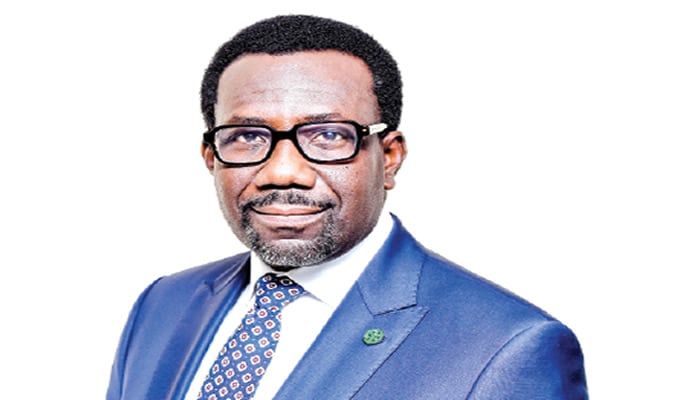
OLUSEGUN OMOSEHINThe National Insurance Commission has unveiled a comprehensive implementation strategy for the National Insurance Industry Reform Agenda 2025.

According to NAICOM on Tuesday, the strategy was launched at a high-level meeting held in Abuja, where the Commissioner for Insurance, Mr Olusegun Omosehin, inaugurated three core working groups to drive the execution of NIIRA’s objectives across the insurance value chain.

The PUNCH reports that NIIRA 2025, signed into law in July, sets out a holistic roadmap for regulatory reform, financial inclusion, digital transformation, and compulsory insurance enforcement.

Speaking during the strategy session, Omosehin reaffirmed NAICOM’s commitment to ensuring that the implementation phase of NIIRA is inclusive, data-driven, and results-oriented.

“This marks the beginning of a coordinated journey toward achieving a stronger, more transparent, and technology-driven insurance industry. The NIIRA 2025 is not just a regulatory document; it is a blueprint for building an insurance sector that protects lives, businesses, and investments across Nigeria,” Omosehin stated.

He added that the new working groups would serve as engines of reform, ensuring that critical policy objectives are translated into measurable outcomes.

The Working Groups comprise the Compulsory Insurance Working Group, chaired by Shola Tinubu, with the mandate to strengthen the enforcement and adoption of all compulsory insurance schemes across the country, including motor (third party), builders liability, group life, professional indemnity, and public buildings insurance.

The Digitisation Working Group is led by Adetola Adegbayi and has the mandate to modernise the insurance regulatory ecosystem through innovative digital tools and platforms, and the third group is the Financial Inclusion Working Group, chaired by Dr Yeside Oyetayo. This group has the mandate of deepening insurance penetration, particularly among underserved and low-income populations.

The Commissioner commended stakeholders for their dedication and expressed confidence that the new implementation structure would fast-track industry-wide reforms. “This strategy represents a shared responsibility to deliver results that will redefine the perception and impact of insurance in Nigeria. We must all see ourselves as partners in national development.”

Unilever doubles profit to N22bn in Q3

Unilever-sign-Mexico-990x557_tcm1269-420843Unilever Nigeria Plc has reported a significant increase in its financial performance for the nine months ended September 30, 2025, posting a turnover of N155bn, up 50 per cent from N104bn recorded in the same period last year.

The company’s gross profit rose 49 per cent to N64bn, while net profit after tax doubled to N22bn, compared with N11bn in the corresponding period of 2024.

Speaking on the results, Managing Director, Tobi Adeniyi, attributed the strong performance to the company’s focus on its power brands, strategic product mix optimisation, and disciplined cost management.

He said, “Our Q3 performance reflects the strength of our focus on our power brands, strategic product mix optimisation, and disciplined cost management. We are committed to sustaining brand investment, ensuring supply chain resilience, and delivering volume-led growth with our robust portfolio.”

Adeniyi also emphasised Unilever Nigeria’s commitment to local manufacturing and partnerships, stating, “As a cornerstone of Nigerian manufacturing for over 100 years, we continue to invest locally in expanding our operations, build equitable partnerships across our value chain, and nurture deep trust with our Nigerian consumers.”