Fidelity Bank extends savings promo

Photo GAIM 6 Prize Presentation GbagadaThe bank explained that the promo targets a broad demographic, including NYSC members, women, children, and small traders, with participation starting from deposits as low as N2,000.

It stated that the draws were supervised by the Federal Competition and Consumer Protection Commission to ensure fairness and transparency.

Each N5,000 deposit qualifies customers for the monthly and grand draws, where N10m, N5m, and N2m will be awarded to the grand prize winner, first runner-up, and second runner-up respectively.

Fidelity Bank added that N47m remains available to be won in upcoming draws, including N30m in the monthly draws and N17m in the grand finale scheduled for December.

In the seventh and eighth monthly draws, 20 customers received N1m each.

Speaking on the development, the bank’s Divisional Head of Product Development, Osita Ede, said the promo’s extension was based on customer feedback.

“They asked for more opportunities to benefit from the promo, and we listened. With management and regulatory consent, we’re thrilled to keep the excitement going for another three months,” he said.

NNPC can increase stake in Dangote refinery — Aliko

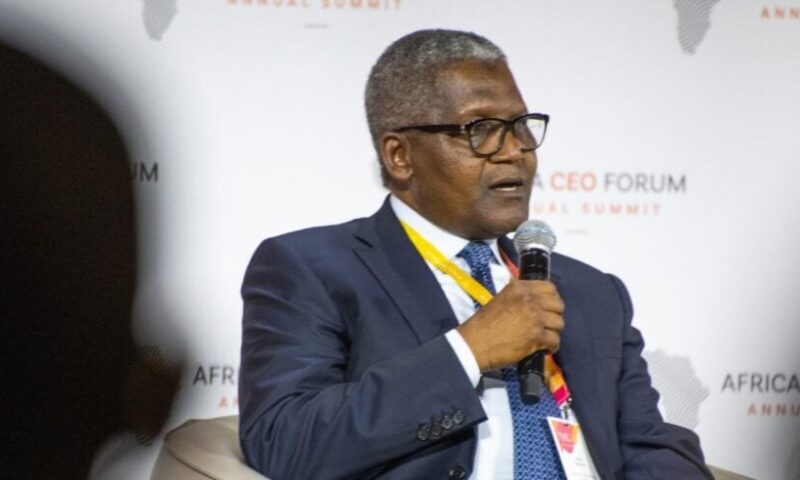
Aliko DangoteThe President of the Dangote Group, Alhaji Aliko Dangote, has said the Nigerian National Petroleum Company Limited has the opportunity to increase its 7.2 per cent stake in the Dangote refinery.

However, Dangote said this would happen after he must have proven to the state-owned company what the refinery can do.

Dangote stated this in a recent interview with S&P Global Commodity Insights.

“The door remains open for Nigerian National Petroleum Co. to boost its stake after the state oil company trimmed its interest to 7.2 per cent, but not before its next phase of growth is well underway.

“I want to demonstrate what this refinery can do, then we can sit down and talk,” Dangote was quoted as saying.

A close aide of Dangote was also reported to have said that the company would exert caution before inviting additional participation from NNPC.

Within the next year, he noted that the refining business will list 5–10 per cent of its shares on the Nigerian stock exchange.

“We don’t want to keep more than 65-70 per cent,” Dangote said, explaining that shares will be offered incrementally subject to investor appetite and market depth.

The NNPC had reduced its stake in the Dangote refinery from 20 per cent to 7.2 per cent.

The former spokesperson of the Nigerian National Petroleum Company Limited, Olufemi Soneye, disclosed last year that the state-owned energy firm reduced its stake in the Dangote refinery to invest in compressed natural gas.

Soneye revealed that the NNPC capped its stake at 7.2 per cent instead of 20 per cent to build CNG stations across the nation.

He stated this while featuring on Berekete Family Radio, a video of which was sighted by our correspondent.

He mentioned that the NNPC realised that CNG was more affordable as a better energy alternative for Nigerians, especially during the period of energy transition.

He added that Nigerians could fuel their vehicles with N10,000 when using CNG, compared to petrol.

“The reason for reducing our stake in the Dangote refinery is because we wanted to invest in CNG. We observed that CNG is very cheap, and all over the world, people are investing in clean and cheaper alternative energy.

“That is why the NNPC is building different CNG stations everywhere. We understand that with N10,000, Nigerians can fill their cars and use it for two weeks. We realised that gas is cheaper in Nigeria; why don’t we invest in it?” the former NNPC spokesman said in August 2024.

The new Group Chief Executive Officer of the NNPC, Bayo Ojulari, had recently told Argus Media that NNPC remains committed to increasing its stake in the 650,000-barrel-per-day Dangote refinery.

Many Nigerians were surprised to hear from Dangote in 2024 the the NNPC had trimmed its investment in the refinery to a paltry 7.2 per cent.

mayTotal transactions in the nation’s equity market rose significantly by 78.5 per cent to N1.62tn in September 2025, up from N908.38bn recorded in August 2025, according to the latest Domestic and Foreign Portfolio Participation in Equity Trading report released by the Nigerian Exchange Limited on Thursday.

The NGX attributed the sharp increase in trading value to a series of block trades executed during the month under review, which boosted overall market activity.

The report showed that domestic investors continued to dominate trading on the exchange, accounting for 76.09 per cent of total market transactions valued at N1.23tn, while foreign investors accounted for 23.91 per cent, representing N387.62bn.

Compared to September 2024, when the total transaction value stood at N493.01bn, the September 2025 performance reflected a strong year-on-year growth of 228.89 per cent.

Further analysis revealed that total domestic transactions rose 67.51 per cent from N736.57bn in August 2025 to N1.23tn in September 2025. Similarly, total foreign transactions jumped 125.61 per cent from N171.81bn (about $112.18m) to N387.62bn (about $262.73m) within the same period.

On a segmental basis, institutional investors outperformed their retail counterparts during the month. Institutional investors accounted for N955.26bn of total domestic trades, representing a 143.13 per cent increase from the N392.90bn recorded in August. In contrast, retail investors’ participation fell 18.94 per cent to N278.57bn from N343.67bn in the preceding month.

The NGX report noted that the value of domestic transactions in the first nine months of 2025 stood at N6.70tn, representing 78.44 per cent of total market activity, while foreign transactions amounted to N1.84tn, or 21.56 per cent. This reflects a significant increase from the corresponding period in 2024, when domestic and foreign trades stood at N3.27tn and N696.88bn, respectively.

Over an 18-year period, domestic transactions on the exchange have grown 33.15 per cent, from N3.56tn in 2007 to N4.73tn in 2024, while foreign transactions increased 38.31 per cent, from N616bn to N852bn within the same period.

The report also stated that the exchange rate stood at N1,495.35 to a dollar at the end of September 2025, compared to N1,531.57 to a dollar in August 2025, based on data from the Nigerian Autonomous Foreign Exchange Market.

Analysts believe that the participation of institutional investors and renewed foreign inflows indicate rising confidence in the Nigerian equity market amid efforts by the Central Bank of Nigeria and fiscal authorities to stabilise the economy.

NAICOM, FRSC, NHIA align to enforce motor insurance, others

NAICOMThe National Insurance Commission, the Federal Road Safety Corps and the National Health Insurance Authority have entered into agreements to enforce motor insurance and others under the new Nigerian Insurance Industry Reform Act 2025.

NAICOM, in a statement on Thursday, said that the agreements were arrived at during a meeting at the NAICOM Headquarters in Abuja, where the three agencies outlined concrete steps to integrate data systems, launch public awareness campaigns, and jointly enforce compliance with compulsory motor insurance requirements across the country.

According to the resolutions reached, the first major step will be the integration of data-sharing systems between NAICOM and FRSC to enable real-time verification of vehicle insurance status. This, officials said, will help eliminate fake motor insurance policies and ensure a swift response to road incidents involving insured motorists.

Secondly, the agencies agreed to embark on a joint awareness campaign to educate the public on the benefits of genuine motor insurance and the broader link between insurance coverage and road safety.

The meeting also endorsed the creation of a joint enforcement committee, tasked with ensuring strict compliance with motor insurance laws and addressing cases of fraud or fake documentation. Additionally, FRSC will include valid insurance verification as part of its nationwide enforcement and licensing operations.

FRSC Corps Marshal Shehu Muhammed emphasised the importance of “enhanced data exchange between NAICOM and FRSC to develop a robust system for quick response to road accidents and compensation.”

The Corps Marshal also stressed the importance of digitising the process for prompt emergency response and eliminating fake motor insurance policies.

In his remarks, the Commissioner for Insurance, Mr. Olusegun Omosehin, reaffirmed NAICOM’s commitment to working closely with the FRSC and NHIA to protect motorists and accident victims.

Omosehin said that “NIIRA 2025 has strengthened the compulsory third-party motor insurance policy and established a fund for compensating road accident victims, which will be administered by a committee that includes FRSC representation.”

The NHIA’s representative, Mr. Ajodi Nasir, highlighted the health dimension of the partnership, noting that the collaboration would ensure faster and better medical treatment for accident victims.

Nasir affirmed that the synergy will culminate in a robust system that not only safeguards roads but also ensures prompt and quality medical treatment for accident victims, thereby reducing the morbidity and mortality associated with road crashes.

The newly formed partnership underscores the federal government’s broader reform agenda under NIIRA 2025, which seeks to modernise Nigeria’s insurance ecosystem, improve safety standards, and protect the lives and livelihoods of all road users.

A date will soon be announced for the inauguration of the joint enforcement and coordination committee.

NGX adds N479bn as reforms boost investor confidence

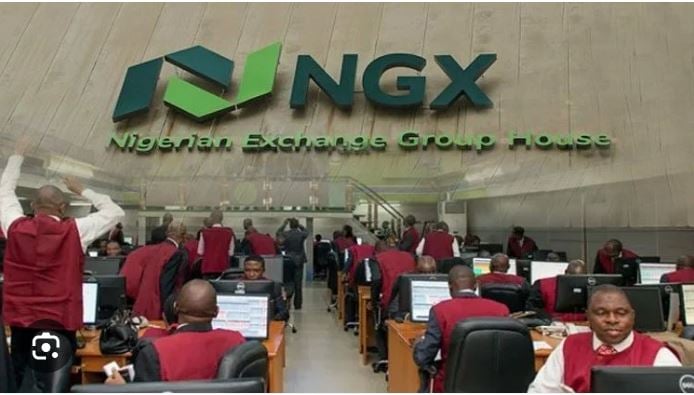
NGXNigeria’s equities market sustained its upward trajectory on Thursday, recording a gain of N479bn in market capitalisation as investors continued to respond positively to ongoing economic reforms and improving macroeconomic indicators.

At the close of trading, the Nigerian Exchange index advanced by 753.65 points, or 0.49 per cent, to close at 154,489.90 points, while the market capitalisation appreciated to N98.1tn from the N97.6tn recorded in the previous session. The week-to-date performance showed a 4.14 per cent increase, reflecting renewed buying interest in blue-chip stocks across key sectors.

Market data showed that a total of 926.91 million shares valued at N26.94bn were traded in 30,685 deals, representing a 57 per cent improvement in volume, a 12 per cent rise in turnover, and an eight per cent increase in the number of deals compared to the previous trading day.

In all, 130 listed equities participated in the day’s trading, with 34 gainers and 37 losers. PZ Cussons Nigeria led the gainers’ chart with a 10 per cent rise to close at N42.90 per share, followed by The Initiates Plc, which also gained 10 per cent to close at N14.30. Aso Savings and Loans appreciated 9.09 per cent to N0.60, while CAP Plc added 8.82 per cent to settle at N74.00 per share. Lafarge WAPCO climbed 8.63 per cent to N150.45 amid renewed investor interest in industrial stocks.

On the flip side, John Holt Plc topped the losers’ chart, declining 9.72 per cent to N6.50 per share. Multiverse Mining and Exploration dropped 9.71 per cent to N12.55, while Stanbic IBTC Holdings and Nigerian Breweries shed 9.15 per cent and 7.83 per cent, closing at N107.20 and N70.00 per share, respectively.

Japaul Gold and Ventures led in trading volume with 436.04 million shares worth N1.09bn, followed by Fidelity Bank with 77.3 million shares valued at N1.53bn. Lafarge WAPCO traded 46.4 million shares worth N6.98bn, while Access Holdings exchanged 32.6 million shares valued at N804.76m. NASCON Allied Industries also featured among the top trades with 17.9 million shares worth N1.99bn.

The top five stocks by value were Lafarge WAPCO (N6.98bn), Seplat Energy (N2.31bn), NASCON (N1.99bn), Presco Plc (N1.75bn), and Aradel Holdings (N1.62bn).

Sectoral performance showed mixed sentiments as the Industrial Index surged 3.09 per cent, the Premium Index rose 1.67 per cent, and the Oil and Gas Index appreciated 1.13 per cent. However, the Main Board Index declined slightly by 0.17 per cent.

Analysts attributed the sustained market rally to reform-led optimism, stronger foreign exchange liquidity, and improving macroeconomic coordination between fiscal and monetary authorities. They noted that the liberalisation of the naira, removal of fuel subsidies, and passage of the new Investments and Securities Act have contributed to renewed investor confidence.

At the recently held Financial Times Africa Summit 2025 in London, the Group Managing Director and Chief Executive Officer of NGX Group, Temi Popoola, highlighted the role of coordinated reforms in restoring investor trust. “The strength we’ve seen in the market has been driven largely by reforms, from the president’s economic agenda to decisive actions by the Central Bank of Nigeria, the Securities and Exchange Commission, PENCOM, and other regulators,” he said.

Similarly, the Director-General of the Securities and Exchange Commission, Emomotimi Agama, noted that the new Investments and Securities Act 2025 has enhanced governance and regulatory transparency in the market. “Robust regulation has been central to restoring market integrity and investor trust, providing the clarity required to anchor long-term capital formation in Nigeria,” he stated.

With a year-to-date gain of 50.1 per cent, the NGX remains one of the best-performing markets globally, reflecting growing investor conviction that Nigeria’s policy realignment is beginning to yield tangible results. Analysts believe that sustained reform implementation and deepening private sector participation will further enhance market stability and attract long-term capital inflows into the economy.

Savannah Energy reports US$185.2m revenue

Savannah_Energy_Logo_CMYK_v04Savannah Energy Plc, a British independent energy company focused on the delivery of critical energy projects, has reported a total revenue of US$185.2m for the nine months ended September 30, 2025, representing a nine per cent increase from the US$169.3m recorded in the corresponding period of 2024.

The unaudited operational and financial update released by the company showed that cash collections also rose by five per cent to US$241.6m from US$229.3m in the same period of 2024. Savannah’s cash balance grew significantly to US$101.8m as of September 30, 2025, up from US$32.6m at the end of December 2024.

According to the report, the company recorded a one per cent and nine per cent reduction in net debt and trade receivables, respectively. Net debt stood at US$629.9m, down from US$636.9m as of December 2024, while trade receivables dropped to US$493.3m compared to US$538.9m at year-end 2024.

Savannah disclosed that it signed agreements with a consortium of five Nigerian banks to increase its Accugas debt facility from N340bn (approximately US$222m) to N772bn (around US$500m). The transitional facility is expected to help repay the remaining outstanding balance of the Accugas US$ facility by the end of 2025.

The company also said it had reached a term sheet agreement between its wholly owned subsidiary, Savannah Energy EA, and a major African financial institution for a new US$37.4m debt facility to fund its planned acquisition of a 50.1 per cent stake in Klinchenberg BV, which holds indirect interests in three East African hydropower projects.

As part of its fundraising efforts, Savannah announced plans to raise about £11.3m through the subscription of 161,061,510 new ordinary shares at seven pence per share. It added that the completion of the final tranche of its March 2025 fundraising—138,977,614 new shares at seven pence per share—is expected soon, with approximately £9.7m in subscription funds to be received.

Savannah further announced the planned entry of a new strategic shareholder, NIPCO, a Nigerian energy conglomerate, which intends to invest around £28.7m in the company through a combination of new share purchases and secondary market acquisitions, representing an estimated 19.4 per cent stake in the company’s enlarged share capital.

UBA, Renewvia deploy solar systems across 25 branches

uba-logoUnited Bank for Africa has partnered with Renewvia Solar Nigeria to deploy solar solutions across 25 UBA branches in five Nigerian states.

According to a statement from the lender on Wednesday, the move strengthened economic ties between Nigeria and Norway.

The partnership was formalised at the ribbon-cutting ceremony held at the UBA Oba Akran 2 branch, Ikeja-Lagos, Nigeria, which was attended by the Nordic Ambassador to Nigeria, Mr. Svein Bæra, following an inspection of the Inverter/Battery room and operations by the Renewvia team.

This initiative reflects a growing commitment to sustainable investment and innovation, a key message emphasised by UBA Group Chairman, Tony Elumelu, during the recent Norway–Africa Business Summit held in Oslo, where he urged global partners to view Africa not as an aid destination, but as a continent of opportunity and enterprise.

The partnership between UBA and Renewvia embodies that call, channelling Nordic investment and African innovation into tangible, long-term impact. Supported by Empower New Energy, a leading Norway-based renewable investment company, and Incremental Energy Solution, the project will deliver the first phase of 152,000 kWh of clean energy monthly, reducing UBA’s carbon footprint by over 89,000 kilograms of CO₂ each month.

Under a 10-year Power-as-a-Service agreement, Renewvia will deploy advanced solar and battery hybrid systems across UBA’s branches, ensuring superior power reliability, operational efficiency, and an enhanced customer experience. Upon full rollout, the project will cover 50 locations across 18 states, representing 3 MWp of solar capacity and 7 MWh of energy storage.

On the partnership, UBA’s Deputy Managing Director, Muyiwa Akinyemi, said, “At UBA, we believe sustainability is not just a responsibility but a key part of building Africa’s future. This project demonstrates how innovation and partnership can deliver lasting impact in terms of growth and advancement, as well as reducing our carbon footprint, improving operational efficiency, and contributing to a cleaner environment. We are proud to work with Renewvia Solar Nigeria, Incremental Energy Solutions, and Empower New Energy to make this vision a reality.”

Earlier, in his goodwill message, the Norwegian Ambassador to Nigeria, Svein Bæra, noted that the partnership is a shining example of what can be achieved when African ambition meets Nordic investment and innovative practices. “It also represents not just an energy milestone but a strong statement of shared commitment to sustainable growth and climate responsibility,” he said.

On his part, the Managing Director of Renewvia Solar Nigeria Limited, Adebowale Dosunmu, said, “This partnership with UBA marks a major milestone in our mission to deliver reliable, clean energy to commercial and industrial clients across Nigeria. We are proud to support UBA’s leadership in sustainability and operational excellence.

The CEO of Incremental Energy Solutions Ltd, Oladipupo Omodara, who also spoke on the project, said, “We appreciate the cooperation and proactiveness of the UBA management team, whose support helped bring this remarkable project and partnership to life. We at IES are particularly pleased that this success reinforces our commitment to helping Africa claim its rightful place in global energy investment and technology deployment.”

Giving his remarks, CEO of Empower New Energy, Terje Osmundsen, stated that Empower New Energy is proud to be the financing partner for a landmark project with Renewvia Solar Nigeria, supporting UBA’s commitment to cleaner and more reliable energy.

“This partnership reflects our mission to enable African businesses to access sustainable power through innovative financing. It also demonstrates the strength of Nordic-African cooperation in accelerating the transition to renewable energy,” Osmundsen explained.


Lafarge sees Q3 profit rise 144% to N75bn

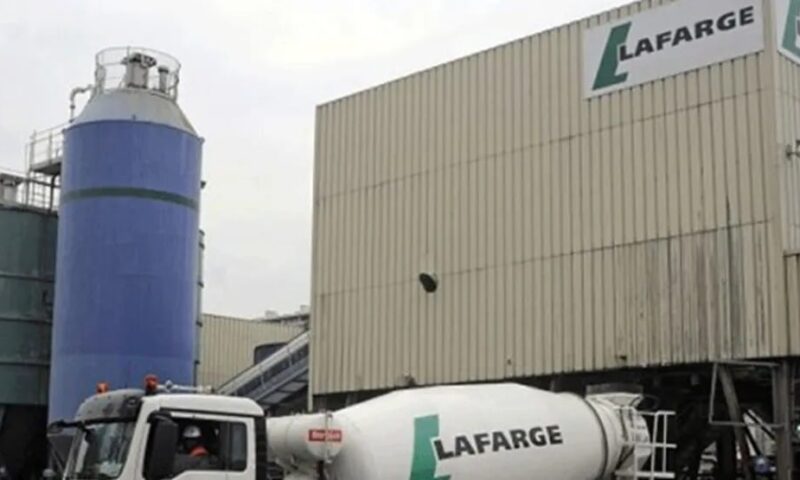
LafargeLafarge Africa Plc has reported a 144 per cent increase in its profit after tax to N75bn for the third quarter of 2025, compared to N30.7bn recorded in the corresponding period of 2024, driven by higher sales volume.

According to the company’s unaudited financial statements released on Wednesday, Lafarge’s net sales rose 43 per cent to N264bn in the third quarter of 2025 from N183.9bn in the same period last year, reflecting strong demand, improved plant reliability, and sustained market growth.

The company’s operating profit for the quarter also grew 107 per cent to N106bn, compared to N51.1bn recorded in the third quarter of 2024, while its operating margin increased to 40 per cent from 28 per cent in the previous year.

Similarly, profit before tax stood at N113.5bn, representing a 138 per cent increase compared to N47.7bn in the corresponding quarter of 2024. Earnings per share rose 144 per cent to N4.66 from N1.91 reported in the same period last year.

For the nine months ended September 2025, Lafarge Africa recorded total net sales of N780.5bn, a 63 per cent year-on-year growth from N479.5bn in 2024. The company’s operating profit rose 129 per cent to N298.4bn, while profit after tax surged 246 per cent to N207.8bn, compared to N60.1bn in the same period of 2024.

The company attributed the strong performance to efficiency gains, volume growth, and strategic market positioning.

Commenting on the results, the Chief Executive Officer of Lafarge Africa Plc, Lolu Alade-Akinyemi, said the company’s impressive third-quarter performance reflects its resilience and focus on operational excellence.

He said, “Building on the performance from previous quarters, our third-quarter results showcase cost discipline, strategic market positioning, unwavering commitment to value creation, and strong operational efficiency – demonstrated by a seven per cent year-on-year improvement in capacity utilisation.

“We closed the third quarter with net sales up 43 per cent, operating profit up 107 per cent, and profit after tax of N75bn. Our nine-month performance reaffirms our resilience, underpinned by sustained volume growth, operational excellence, innovative product offerings, and agile response to market opportunities.”

Alade-Akinyemi added that the company remains confident in its strategic direction despite the dynamic macroeconomic environment, noting that Lafarge is well-positioned to seize emerging opportunities and deliver long-term value to shareholders.

During the quarter, Lafarge Africa also launched ECOCrete, Nigeria’s first low-carbon ready-mix concrete. The innovative product, designed to deliver at least a 20 per cent reduction in carbon emissions while maintaining high performance, reflects the company’s ongoing commitment to sustainability and greener construction practices.

The launch of ECOCrete follows the second-quarter introduction of ECOPlanet, a low-carbon cement product that has gained traction in the Western market and accounted for over 50 per cent of total cement sales in the region during the third quarter.

The CEO expressed gratitude to employees, customers, and stakeholders for their continued confidence and contribution to the company’s success, emphasising Lafarge Africa’s focus on driving sustainable growth and maintaining industry-leading standards in health, safety, and environmental performance.

He said, “In an evolving macroeconomic landscape, our people and partners remain at the heart of our success. Their commitment and belief in our purpose strengthen our resolve to build progress for people and the planet.”

NNPC loses N380bn revenue in Sept

NNPC-Limited-new-logo-e1658490695904

The Nigerian National Petroleum Company Limited has suffered a drop in both production and earnings, losing about N380bn in September 2025 when compared to the previous month, according to its latest monthly performance report.

Figures from the September report showed that the company’s total revenue stood at N4.27tn, lower than the N4.65tn posted in August, representing a month-on-month loss of about N380bn.

Profit after tax also declined from N539bn in August to N216bn in September.

The report indicated that total crude oil and condensate production averaged 1.61 million barrels per day in September, compared to 1.65 million barrels per day in August.

NNPC explained that the shortfall was caused by “planned maintenance activities, including those at NLNG, alongside the phased recovery of previously shut-in assets and delays in the commencement of operations at OMLs 71 and 72.”

Data from the report showed that crude oil production slipped from 1.39 mbpd to 1.37 mbpd, while condensate output dropped from 0.26 mbpd to 0.24 mbpd.

Natural gas production also fell within the same period. According to the report, gas output declined from 6,949 million standard cubic feet per day in August to 6,284 mmscf/d in September, while gas sales reduced from 4,201 mmscf/d to 3,443 mmscf/d.

Despite the lower output, NNPC said work advanced on major gas projects. It reported that sustained focus is being directed towards completion of the mainline works on the Ajaokuta-Kaduna-Kano gas pipeline, which had reached 88 per cent completion as of September.

On the Obiafu-Obrikom-Oben gas pipeline, the company stated that “implementation of a revised execution strategy is underway to ensure delivery within target timelines.”

It added that a “113 km portion of the OB3 Gas Pipeline has been commissioned and is flowing circa 300 mmscf/d of gas” from producers including AHL, Platform, Chorus, and Xenergi.

NNPC’s cumulative statutory payments from January to August stood at N10.07tn, unchanged from the previous month.

Its retail station wetness across the country, an indicator of petrol availability, also dipped slightly from 79 per cent in August to 77 per cent in September.

It was stated that the NNPC Foundation expanded its social impact initiatives during the period as the foundation flagged off its training for vulnerable farmers in the Northern Zones, with 2,141 farmers trained in the North-Central Geopolitical Zone, bringing the total number of smallholder farmers trained to 7,072.

It also said that “in partnership with the Nigerian Cardiac Society, the foundation provided 25 indigent Nigerians with life-saving percutaneous cardiac interventions alongside basic life support training.”

The foundation also participated in the Africa Film Finance Forum, where it “showcased NNPC Ltd’s social interventions and supported youth entrepreneurship in the creative industry with participation sponsorship for youth corps members and undergraduates.”

The combined data from August and September indicate that while the company maintained progress on infrastructure and social projects, operational performance weakened in September as reduced oil and gas output led to lower revenue and profit.

The NNPC Group Chief Executive Officer, Bayo Ojulari, had earlier said the two-day strike embarked upon by oil workers’ unions during their crises with the Dangote refinery also affected productions.

Insurance Is A Strategic Enabler of National Development Not Merely A Financial Product – emPLE CEO

Mr. Rantimi Ogunleye, CEO of emPLE Life Assurance Limited, has stated that as Nigeria charts it’s course towards becoming a $1 trillion economy by 2030, that insurance industry must transition from a peripheral role to a central driver of economic resilience and investment confidence.
Ogunleye, who was represented by Mr. Jolaolu Fakoya at the Finance and Business Online Publishers (FiBOP) 2025 National Conference held in Lagos, called for a sector-wide mindset shift, urging policymakers, investors, and industry leaders to treat insurance not merely as a financial product, but as a strategic enabler of national development.
“Insurance is more than numbers; it’s the confidence to build, invest, and grow. If we get it right, we won’t just contribute to GDP—we will help safeguard it,” Ogunleye asserted.
Despite its current GDP contribution of just over $1 billion—translating to less than 1% penetration, insurance, he argued, underpins critical sectors such as agriculture, oil and gas, real estate, logistics, and construction.
While  illustrating, Ogunleye pointed to Dangote’s $20 billion refinery, highlighting that such capital-intensive ventures are only possible with robust insurance coverage providing the risk buffer necessary for investment.
The conference, brought together finance, policy, and tech leaders for high-level discussions on sustainable economic growth. For emPLE Life Assurance, the message was clear: insurance must be recognized as a cornerstone of economic continuity and stability.
In his presentation titled “The Strategic Place of Insurance in the Achievement of One Trillion Dollar Economy for Nigeria: Claims  Payments and Customers Feedback,” said “From farmers to fintech founders, from construction firms to cargo carriers, insurance allows stakeholders to operate with reduced exposure to risk,” .  “It creates the resilience that keeps the economic engine running.”
Ogunleye identified persistent structural barriers stalling the industry’s growth—including low consumer trust, poor awareness, and deep-rooted cultural skepticism, especially surrounding claims payments. He emphasized the need for transparent communication, simplified policy language, and consistent, high-integrity claims settlement practices.
“Claims payment is the strongest form of public relations in insurance. It builds trust better than any ad campaign ever could,” he stated.
A major highlight of Ogunleye’s presentation was the recent passage of the Nigerian Insurance Industry Reform Act (NIIRA) 2025—a legislative milestone mandating compulsory insurance across key sectors, including public buildings, infrastructure projects, trade, and professional services.
Calling the Act a “landmark step,” he noted that it institutionalizes risk management as a prerequisite for economic activities and introduces enforcement mechanisms to ensure compliance.
“This reform aligns the insurance sector more directly with Nigeria’s development priorities,” he noted. “It’s a signal that risk management is now a national imperative.”
Ogunleye warned that legal mandates alone are insufficient, noting that reaching the informal sector where most Nigerians live and work requires innovative, low-cost, and accessible products tailored to daily realities.
“It’s hard to sell a policy to someone who’s worried about their next meal,” he observed. “Affordability and access must be front and center.”
He urged a multi-stakeholder coalition involving regulators, insurers, fintechs, and community leaders to drive penetration beyond urban centers and salaried workers.
He called for bold thinking, digital inclusion, and behavioral research to design insurance solutions that reflect the socio-economic dynamics of Nigeria’s diverse population.
“The future of Nigeria’s economy won’t just be built with steel and cement, but with trust, protection, and resilience. Insurance must be a pillar—not an afterthought—of our $1 trillion ambition.”
As Nigeria pushes toward its $1 trillion economic target, the message is clear: Without insurance, there is no resilience. Without resilience, there is no sustainable growth.