50 Drivers of the Blue Economy’: MARAN launches historic publication honouring Maritime Leaders


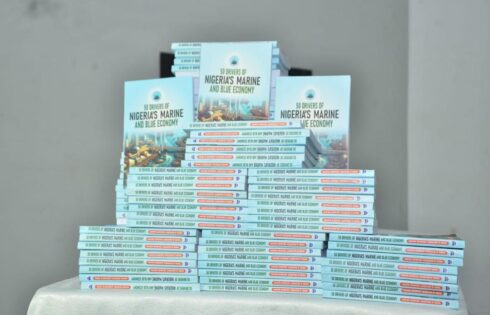
Picture: The book “50 Drivers of the Marine and Blue Economy’, smoking hot 

The Maritime Reporters Association of Nigeria (MARAN) unveiled a landmark publication yesterday, celebrating individuals and institutions that shape the country’s maritime and blue economy landscape.

The new book, titled “Fifty Drivers of the Nigerian Marine and Blue Economy,” was launched in Lagos on Thursday, marking a major milestone in documenting the nation’s maritime evolution. The event, themed “Driving the Blue Agenda: Recognizing Champions Steering Nigeria’s Marine Economy,” brought together industry stakeholders to honour innovators and reformers driving growth across the sector.

Chairman of the launch and former Minister of Interior, Capt. Emmanuel Ihenacho, described Nigeria’s maritime industry as a “vital component” of the national economy. He emphasized that, with proper harnessing, the sector has immense potential for economic growth and national development.

Ihenacho also acknowledged the foundational contributions of past and present maritime leaders, tracing the sector’s evolution from the establishment of the National Shipping Line in 1959 to the birth of NIMASA in 2007.

“The book launch theme is carefully chosen to spotlight the individuals, institutions, and innovations driving the country’s Marine and Blue Economy,” he said.

Executive Secretary of the Nigerian Shippers’ Council (NSC), Dr. Pius Ukeyima Akutah, who was represented by Assistant Director of Operations, Mrs. Juliana Saka, described the publication as a significant milestone. He applauded MARAN for demonstrating vision and professionalism by documenting the contributions of key players in the sector.

“The marine and blue economy offers vast opportunities requiring collaboration, innovation, data, and accountability. MARAN’s work strengthens public understanding, celebrates behind-the-scenes contributors, and elevates discourse shaping policy, investment, infrastructure, and sustainable maritime development.” Akutah said.

Also speaking, former NSC Executive Secretary, Mr. Hassan Bello in his goodwill message, described the celebration as timely, given the sector’s over 60 years of steady progress. He noted that Nigeria’s maritime economy remains central to national growth.

“All generations must unite to support and preserve the sector, honour past contributors, and work together for continued success,” he said.

In her review of the publication, former SERVICOM General Manager at the Nigerian Ports Authority (NPA), Mrs. Carol Ufere, said the book offers research-driven insights into ministries, agencies, industry leaders, reforms, and policy directions shaping Nigeria’s blue economy. She highlighted its focus on governance, innovation, digitalisation, security architecture, and institutional strengthening.

According to her, the chapters examine the Nigerian Maritime Administration and Safety Agency (NIMASA), NPA, National Inland Waterways Authority (NIWA), Nigeria Customs Service, Nigerian Railway Authority, and other critical institutions, while showcasing achievements, challenges, and reforms needed to enhance competitiveness and sustainability.

Speaking earlier in his opening speech, MARAN’s Caretaker Committee Chairman, Mr. Tunde Ayodele, said the launch was organised to honour individuals and institutions whose service and vision have shaped Nigeria’s maritime trajectory. He noted that the publication not only documents their contributions but also reinforces ongoing efforts to advance the marine and blue economy.

Ayodele described the launch as a historic moment for the maritime media community and the broader sector, expressing appreciation to all who attended.

“Developed through extensive research, the book highlights outstanding leaders, private organisations, and agencies whose collective efforts drive reforms, innovation, and sectoral growth,” he said. “This first edition also recognises emerging talents and future contributors to the industry,” Ayodele said.

Picture: Former Interior Minister Captain Emmanuel Iheanacho unveils the book as MARAN Caretaker Committee Chairman Tunde Ayodele in green and former ES Nigeria Shippers Council Barrister Hassan Bello in Blue watch.

Maritime editors, stakeholders, citizens blast Sanwo-Olu’s port monopoly mindset

By Foster Obi

The maritime community in Nigeria has erupted in a chorus of condemnation following a statement attributed to Lagos State Governor Babajide Sanwo-Olu, decrying the Nigerian Ports Authority (NPA)’s efforts to deepen and operationalise ports in the South-South and South-East, including Warri Port Complex, Onne Port Complex and Calabar Port as part of broader plans to ease chronic congestion in Lagos.

The League of Maritime Editors (LOME), led by its President, Mrs Remi Itie, and Secretary-General, Mr Felix Kumuyi, described the governor’s remarks as “a demonstration of obsession with Lagos dominance” and a direct affront to the notion of equitable national development. As the League puts it: “Nigeria is a federation, not a fiefdom.”

Their critique underscores two decades of over-concentration in the port sector, mainly at the country’s two major Lagos ports, Apapa Port and Tin Can Island Port which have long borne the brunt of traffic congestion, corruption, inefficiency and incessant gridlock. According to LOME, efforts to bolster and diversify port operations across Nigeria are not only justified, they are imperative.

“To now resist the decentralisation of port operations to Warri, Onne or Calabar is to insist that Nigeria’s economy remain shackled to Lagos’ dysfunction,” the League argued.

The criticism from LOME aligns with growing frustration among shipping professionals and freight operators. It comes amid a flurry of remarks by Lagos officials rejecting NPA’s decision to shift focus from Lagos to other ports.

A senior aide to the governor, Adekoya Hassan, the Senior Special Assistant on Transportation and Logistics told reporters that the “problem lies not in Lagos ports themselves but in long-standing policy flaws within NPA.” He argued that reckless attempts to divert cargo to Warri amount to a “band-aid” that ignores the real sources of inefficiency: toll-points, a malfunctioning e-call-up system, favouritism, racketeering and abuse of power by senior officials.

According to Hassan, if NPA reformed its institutional framework and aligned with modern economic realities, congestion at Apapa could be drastically reduced, making the pivot to Warri unnecessary.

Yet, many maritime stakeholders vehemently disagree with the Lagos Government’s stance. Among them is the aide to the governor of Delta State, Ossai Success, who described the opposition to the shift as “disappointing.” He insisted the decision to revive Warri and by extension reduce reliance on Lagos is in the best interest of Nigeria, arguing it would spur regional economic development, reduce logistics costs for businesses, ease congestion in Lagos and improve security and surveillance across ports.

Meanwhile, the NPA itself and other proponents of maritime reform have pointed to concrete progress at previously moribund ports. In a recent working tour of the Delta ports, the NPA Chairman and board members disclosed ongoing investments in dredging, channel maintenance, and infrastructure upgrades at Warri, Onne and Calabar, with pledges to continue modernisation across the maritime sector.

These developments are seen not as “band-aids,” but as urgent corrective measures meant to rebalance port operations, relieve Lagos of unsustainable load, and provide the country with a resilient, multipolar maritime network.

Beyond institutional voices, several merchants, truckers and citizens, many of whom spoke anonymously for fear of reprisal dismissed the Lagos State Government’s claim to be the engine of national commerce.

An influential trucker at Apapa, who asked to remain unnamed, said: “We spend days waiting at every checkpoint, paying bribes, even when our call-up number shows green. If Warri or Onne are functioning properly, why should I continue suffering here?”

An Eastern-based importer noted: “When you have to bring cargo from abroad and it’s easier to discharge in Lagos, thousands of naira are wasted on transport, demurrage and extortion. A working port in Warri or Calabar means lower cost not just for me, but for every Nigerian buying imported goods.”

Patrick Ige, a Lagos resident living near the port corridor said the perennial gridlock had become a public safety and environmental hazard: “Trucks parked for hours, sometimes overnight. Noise. Pollution. Accidents. We’ve written to the State, but the only answer is more promises, not solutions.”

Viewed in the full context of Nigeria’s maritime and economic realities, the Lagos Government’s position now appears less like a defence of competence and more like a bid to preserve economic monopoly. Several factors underscore this critique:Persistent failure to resolve Apapa gridlock despite years of state-infrastructure investments and repeated assurances of improvement. Even as late as November 2025, the State still points to “policy flaws at NPA” as root causes.

Pointing to decentralization as a “distraction” or “band-aid,” while ignoring decades of centralised congestion, corruption, and inefficiency.

Ignoring regional equity, economic justice, and the potential for national integration, by resisting the development of other viable ports, especially in the South-South and South-East.

Pitting Lagos’ narrow local interest against Nigeria’s broader national good. In effect, Sanwo-Olu’s rhetoric betrays a dangerous vision where one state monopolises commerce and sidelines other regions, a notion incompatible with genuine federalism and balanced national growth.

Analysts posit that the efforts by the NPA to revive and deepen operations at Warri, Onne, Calabar, and other ports should not be viewed as a threat to Lagos but as a strategic necessity for the whole country. They believe that resistance from Lagos, cloaked in complaints about “policy flaws,” is increasingly revealed as resistance to reform.

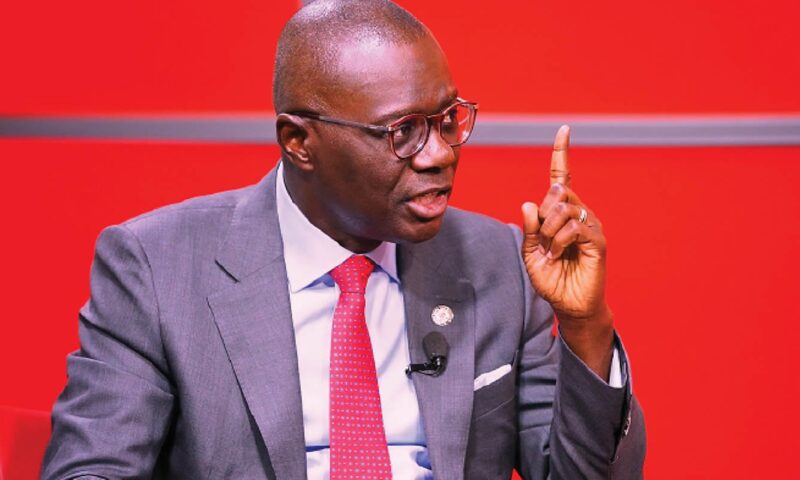
Picture: Lagos State Governor, Babajide Sanwo-Olu


MARAN set to unveil book honouring Drivers of Nigeria’s Marine and Blue Economy


The Maritime Reporters Association of Nigeria (MARAN) has concluded all arrangements for the public presentation of its authoritative new book, “50 Drivers of Nigeria’s Marine and Blue Economy,” scheduled to hold on Thursday, December 4, 2025, at The Providence Hotel, Ikeja GRA, Lagos, by 12 noon.

The publication, produced after extensive sectoral research, chronicles the contributions of key personalities whose ideas, reforms, and interventions have significantly shaped Nigeria’s maritime and blue economy landscape in recent years.

Speaking ahead of the event, the Chairman of the Caretaker Committee of MARAN, Mr. Jayeolatunde Ayodele, said the book represents a bold step by the association to document and spotlight excellence within the industry.

“This publication is MARAN’s unbiased and carefully researched contribution to strengthening institutional memory within the maritime sector. At a time when Nigeria is repositioning its Marine and Blue Economy architecture, it has become critical to recognise individuals whose efforts have driven growth, reforms, and innovation,” Ayodele stated.

“Our goal is to provide a credible reference material that will guide policymakers, industry practitioners, researchers, and students. We believe this documentation will also inspire accountability and encourage a culture of service within the industry.”

Ayodele added that MARAN remains committed to its mandate of deepening industry reportage, promoting transparency, and providing intellectual resources that contribute to national development.

This Thursday’s event will feature notable personalities, including the former Minister of Interior and Chairman of Integrated Oil & Gas, Capt. Emmanuel Iheanacho, who will serve as Chairman of the Occasion; Chief (Mrs.) Carol Ufere, former General Manager, SERVICOM, NPA, who will review the book; and the Minister of Marine and Blue Economy, Adegboyega Oyetola, CON, who will attend as the Special Guest of Honour.

Chairman of the Planning Committee, Mr. Kenneth Jukpor, also expressed confidence that the event will further strengthen collaboration among maritime stakeholders and stimulate broader conversations around Nigeria’s blue economy opportunities.

IMO Category C victory: Nigeria must move from promises to National Shipping Line


By Foster Obi


Nigeria’s recent IMO Council Category C historic victory is cause for celebration, but it also amplifies a long-standing national embarrassment. Despite repeated promises, committees, and ministerial assurances, Nigeria still lacks a functional national shipping line.

Recall that Nigeria had a national carrier which collapsed due to corruption and official complicity.

That absence has tangible costs and strategic consequences for the country’s trade, balance of payments, and maritime independence.

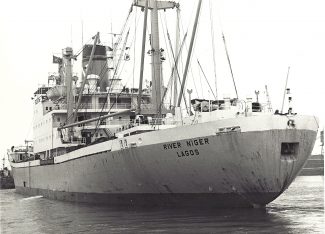
The Nigerian National Shipping Line (NNSL) was established by the Nigerian government in 1959. Despite heavy investment and subsidies, the state-owned company was unable to compete with European lines. Much of the investment went to enriching the political elite. Deeply indebted, the NNSL was liquidated in 1995 and all 21 of its vessels were sold.

Official promises and the silence that followed:

When Adegboyega Oyetola, the Minister of Marine and Blue Economy, outlined the administration’s blue-economy agenda, he repeatedly framed indigenous shipping as central to the plan. The Ministry has published a series of statements affirming the government’s commitment: “Our commitment to indigenous shipping is total and irreversible,” the Minister is quoted as saying in an official release tied to NIMAREX activities.

Also in his earliest stakeholder engagements, the minister publicly announced plans to re-establish a national shipping line under a strategic public–private partnership, describing the initiative as capable of adding as much as $10 billion in economic value if properly structured.

Yet industry sources and insiders say the high-level promises have not translated into an actionable, funded implementation plan that would actually put government-backed tonnage to sea.

“We heard the pledges. We saw the statements. But there has been no visible pilot project, no transparent procurement or clear funding window that demonstrates those words will become ships,” said a senior maritime agency source who has attended Ministry meetings

A bitter cycle of committees, study-tours, and abandoned recommendations:

This pattern is painfully familiar. In 2016, then-Transport Minister Rotimi Amaechi received a committee report on reviving the national shipping line after the ministerial committee’s work and trips abroad. Press coverage at the time recorded concerns about patronage of foreign ships, including a widely reported figure that Nigeria was losing billions to foreign shipowners, and the committee’s recommendations were not fully implemented.

Former President of the Ship Owners Association of Nigeria, SOAN, and Chairman of Starzs Shipping Company, Chief Greg Ogbeifun, told Thisday in an interview that Nigeria was losing over $15 billion annually for not having a national shipping line, with freight services alone accounting for $7 billion.

He said this figure also reflects the taxes Nigeria is forfeiting by not employing Nigerian seafarers and other maritime professionals.

He recalled efforts by the then Minister of Transportation, Rotimi Amaechi, to revive the country’s national shipping line.

“One of the first things the Minister of Transportation, Rotimi Amaechi, did when he assumed office was to form two committees: one to work on the establishment of a national fleet, and the other to examine the structure of NIMASA,” Ogbeifun said.

As a member of the committee on the national fleet, Ogbeifun explained that their mandate was to study what other countries were doing that enables them to successfully establish and maintain their own national fleets.

Another member of that committee said the exercise produced recommendations on financing models, governance, and vessel acquisition but the report gathered dust while money was spent on foreign visits and short-term public relations.

“We travelled, we consulted, we prepared a blueprint. It was never used as the basis for a viable national fleet.”

The economic cost: valuations and official projections

Estimates cited in past reporting show the scale of the leakage. Press reporting around earlier revival efforts quoted figures such as $10 to $12 billion lost to patronage of foreign ships in specific years and government sources have put the upside from a successful national carrier in the billions. In public statements and press briefings, the Federal Government has repeatedly said a national carrier could unlock substantial value, jobs, and retention of foreign exchange.

Clarion Shipping: an indigenous start but has limits

In the vacuum left by the absence of an officially backed national fleet, private initiative has started to fill gaps. Clarion Shipping West Africa, owned by a woman has publicly launched a container service and acquired at least one indigenous-flagged containership (MV Ocean Dragon), pitching itself as Nigeria’s first fully indigenous containership operator. The firm’s launch and vessel acquisition were reported in multiple outlets earlier this year.

Clarion’s management has publicly called for patronage and policy support, highlighting challenges such as dollar-denominated port charges and the capital intensity of liner operations. Analysts and business reports note that Clarion’s arrival is an important symbol and commercially, but that a single private line cannot substitute for a deliberate state framework that addresses finance, levies, guarantees, and route support.

“Clarion’s MV Ocean Dragon shows Nigeria can own and operate ocean-going tonnage. But shipping is a long-haul, capital-intensive game. The Government must reduce structural barriers if indigenous lines are to survive,” said Kalu Eke a freight forwarder at Lagos port.

Why the Minister must move from rhetoric to delivery:

Winning a Category C seat at the IMO gives Nigeria influence in rule-making and technical decisions. But influence without capacity is hollow. A properly structured national shipping programme would: Retain freight earnings and reduce outflows of foreign exchange, Provide commercial capacity for crude, refined product, and specialist cargoes when national interest demands it, Strengthen the hand of Nigerian delegations in multilateral forums by pairing diplomacy with demonstrable capacity.

Also, it will expand training and career paths for Nigerian seafarers and shore staff, and encourage the development of local ship-management, repair, and maritime services.

It’s so humiliating that the country churns out cadets from its maritime academies yearly with no practical sea time experience.

Minister Oyetola himself has repeatedly framed the marine and blue economy as central to economic diversification and insisted indigenous shipping is a priority; words the Ministry has put on record. The sector’s question now is simple: will those words be matched by a funded implementation plan, transparent PPP terms, and early demonstrable steps such as vessel guarantees, subsidy-for-route trials, or a government anchor equity stake that draws private capital?

“The Ministry must stop issuing speeches and start publishing project documents: tender timelines, public-private governance structures, and a rolling five-year financing plan that shows how ships will actually be bought, insured, and deployed,” said Helen Udi, an international shipping policy expert.

What success would look like:

Publish a transparent PPP prospectus and procurement timeline, create a modest pilot fleet (2–4 modern multipurpose/feeder vessels) on strategic routes with guaranteed volume support, offer temporary, targeted levy relief or dollar-charging reform for newly-flagged indigenous services to fix the port-levy cash-flow mismatch like Clarion, others cite.

Use the IMO Category C seat strategically, Pair diplomatic credibility with demonstrable capacity creation on the water, Make the 2016 committee’s (and any later) recommendations public, and explain which will be adopted or discarded and why.

Nigeria’s return to the IMO Category C table should be something to ginger us. The country has both private actors (like Clarion) and a newly invigorated Ministry that has publicly vowed to back indigenous shipping. But unless the Minister moves beyond statements to publishable, funded, and accountable action plans, Nigeria risks repeating old patterns: committees, foreign trips, press releases, and no national carrier.

As Minister Oyetola put it in Ministry statements, “Our commitment to indigenous shipping is total and irreversible. Stakeholders will judge those words at the end whether they were real actions or mere words designed to hug newspaper headlines as Nigerian politicians are wont.

Picture: Vessels belonging to liquidated

MARAN commiserates with former President, ASU BEKS on loss of his wife


The entire members of the Maritime Reporters Association of Nigeria MARAN, join their Colleagues in other Associations in the Maritime industry and beyond, to commiserate with their one-time President, Elder Asu Beks, over the irreparable loss of his amiable and lovely Wife, Mrs HELEN ASU BEKS, whose sad and untimely demise occurred on Thursday,15th November, 2025.
The Association expresses deep shock and exasperation over the incident, hence wishing our former President, his lovely Children, and the entire extended family members of the great ASU BEKS dynasty, divine strength, fortitude, and courage to bear the great loss.
Every MARAN member prays that the Good Lord will continue to preserve and protect the family, while the soul of the Departed AMAZON be granted a perfect rest on the bosom of the Almighty God.
We all say, “TAKE HEART, SIR”, for the Good Lord assures us that those who sleep in Him are not dead but will resurrect on that bright Resurrection Morning, to part no more.
“Sir, do take consolation in this fact and be strong in Him. MARAN loves and stands with you in fervent prayers that would avail much, in His sight.”

NPA spokesman urges journalists to project Nigeria’s maritime industry positively to international community

…Receives MARAN three-man caretaker committee


The General Manager, Corporate and Strategic Communications, Nigerian Ports Authority(NPA), Ikechukwu Onyeamakara, has admonished the Nigerian journalists in the maritime industry to embrace developmental reporting that will positively project the sector to the international community.
Onyeamakara made this admonition while he was playing host to the three-man Caretaker committee of the Maritime Reporters Association of Nigeria (MARAN)led by Tunde Ayodele, who paid him a courtesy visit at the NPA headquarters in Lagos on Tuesday, November 25th, 2025.
Pointing to journalism and its ethics, which allow for balance, accuracy, and facts, Onyeamakara urged Maritime Journalists to strictly adhere to the ethics of the profession, noting that nothing good was ever gained from negative reports.
He solicited for developmental reporting in the sector, especially now that Nigeria is gearing up for elections into the Category C seat at the International Maritime Organisation, (IMO).
The NPA chief image maker noted that such responsible reporting would positively project the industry in Nigeria to the outside world which he believed would garner support from global maritime nations for Nigeria’s victory.
Onyeamakara explained that in other climes, Journalists do not project negative issues of their countries, no matter the situation, hence calling for similar attitude by Nigerian Journalists.
He, however, eulogized MARAN as the very first among the many Maritime Reporters Associations in the sector with a pedigree that has stood the test of time.
He explained that the NPA, in its position both locally and internationally, is more interested in whatever happens in the industry, hence welcoming the idea of a united body of all Journalists’ associations in the maritime industry.
He stressed the need for developmental journalism among the maritime reporters, which he said was crucial for the success of the new Ministry of Marine and Blue Economy.
Maritime is a global industry, and whatever the journalists write has a great impact on how the international community views our country.
” In other climes, journalists project the positive side of their maritime industry, although these countries too have the same challenges Nigeria has,” the NPA image maker disclosed.
Onyeamakara also pledged the NPA’s continued support for MARAN and urged the Caretaker Committee to work assiduously to ensure that a credible set of leaders emerges after the association elections.
” The kind of leaders you elect could make or mar the good legacies of the association.
“So you must be careful and meticulous in your choice of the next leaders of the association so that the efforts of the founding leaders of MARAN would not be jeopardized” Onyeamakara admonished.
In his response, the Caretaker Committee Chairman, Mr Tunde Ayodele, thanked his host for the warm reception and pledged the continued support of MARAN to ensure the management of the NPA succeeds in its task of repositioning the maritime industry.
“NPA has been a long-standing ally of MARAN over the years, and the present caretaker committee will consolidate on the friendship that exists between the two parties through responsible reporting,” Ayodele declared.
He however explained that the recent
Reorganization in the association became necessary to reposition the foremost journalists’ body in the industry.
The Caretaker committee chairman further pledged that MARAN, as the flagship media association in the maritime industry, would continue to practise developmental journalism, adding that MARAN is open to mutually beneficial partnerships with stakeholders, including government agencies in the industry, to build a vibrant shipping sector.
Ayodele used the occasion to invite the NPA management to the MARAN Book Launch, which comes up on December 4th, 2025, in Lagos, a request to which Onyeamakara graciously acceded, promising that the agency’s management will be adequately represented.

Picture: Onyeamakara in a suit with MARAN caretaker committee. The chairman Tunde Ayodele is in Ankara while, Obot is sporting a white caftan and the Treasurer, Ruth Umunna.

MARAN celebrates Nigeria’s historic IMO Council victory


The Maritime Reporters Association of Nigeria (MARAN) has congratulated the Federal Government on Nigeria’s election into Category C of the International Maritime Organization (IMO) Council, describing the victory as a major boost for the nation’s global maritime standing and a strategic win for the blue economy agenda.
In a press statement issued on Friday, the Caretaker Chairman of MARAN, Jayeolatunde Ayodele, said the association received the news of Nigeria’s return to the IMO Council with immense joy, noting that the development reflects the renewed trust of the international community in the country’s maritime reforms and security efforts.
Ayodele said the victory marked the successful culmination of a year-long diplomatic campaign led by the Honourable Minister of Marine and Blue Economy, Dr. Adegboyega Oyetola, CON, whose strategic engagements across continents helped rebuild Nigeria’s presence and credibility within the global maritime sphere. He noted that the win was particularly significant as Nigeria had been absent from the IMO Council for 14 years.
According to him, Nigeria’s election into the Council reaffirms its position as a key maritime state in the Gulf of Guinea and reinforces its role in contributing to international decisions on shipping regulation, maritime safety, and ocean governance. He added that the development would also help drive policy directions that align with Nigeria’s national interest and regional maritime stability.
Ayodele commended President Bola Ahmed Tinubu for providing strong political backing to the campaign, stating that the President’s support enabled the Ministry to engage effectively with partner nations and maritime blocs in a highly competitive election cycle. He said the win would further strengthen the administration’s drive to reposition the marine and blue economy sector as a growth engine for the country.
The MARAN chairman noted that the election could not have come at a better time as Nigeria is intensifying reforms across its maritime institutions, including port modernisation, improved waterways security, and enhanced regulatory efficiency. He said being on the IMO Council would open more channels for technical cooperation, knowledge sharing, and partnerships that could accelerate these reforms.
KHe urged maritime agencies to leverage the momentum created by the victory by deepening collaboration, improving service delivery and aligning their operations more closely with international standards. According to him, Nigeria must now demonstrate through its actions that it is prepared to take full advantage of its restored seat at the IMO.
Ayodele reaffirmed MARAN’s commitment to supporting the Ministry and maritime agencies with accurate reporting, constructive analysis, and sustained coverage, stressing that the association remains a critical partner in efforts to advance Nigeria’s maritime development. He said MARAN expects that Nigeria’s renewed presence at the Council will strengthen investor confidence, attract new opportunities, and give the country a more influential voice in global maritime affairs.
He expressed optimism that Nigeria would utilize the platform to contribute meaningfully to discussions on maritime safety, shipping innovations, environmental sustainability, and global regulatory frameworks that shape the shipping industry.
Ayodele concluded by emphasizing that MARAN will continue to uphold its responsibility as the watchdog of the sector while supporting government efforts aimed at improving the maritime domain and ensuring that Nigeria’s interests are well represented on the international stage.

NCJTFLCA alleges assault, arbitrary detention of officials at Seme border

By Foster Obi

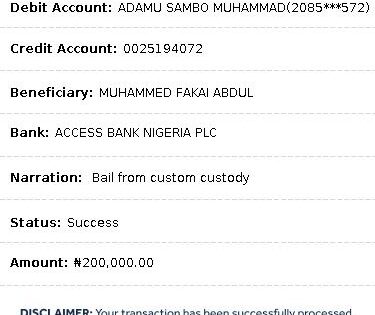
Picture: Bank receipt of the money allegedly paid to process bail for the detainees


The National Compliance Joint Taskforce of Licensed Clearing Agents (NCJTFLCA) has condemned what it describes as a violent attack and unlawful detention of its officials during a routine monitoring exercise near the Seme Border on Monday, November 24, 2025.

A statement signed by Rev. Alex Nwokedi, National Secretary, and Comrade AA Victor, Western Zone PRO, stated that its Western Zone PRO, Comrade AA Victor, led a team to the Badagry roundabout area after observing trucks with covered registration numbers, a red flag for illicit trade. Their attempt to investigate was allegedly met with force by more than 30 individuals, who were allegedly linked to the Association of Nigerian Licensed Customs Agents (ANLCA).

Victor was reportedly beaten, thrown into a drainage, and left with serious injuries before the matter was reported to the police.

NCJTFLCA described as “shocking and unacceptable” the subsequent detention of its officials by officers of the Nigeria Customs Service (NCS), allegedly acting on the directives of the Deputy Comptroller, Enforcement, Badagry. The officials were allegedly held for three days, released only after posting bail and signing an undertaking.

The Taskforce says the assault and detention amount to an orchestrated attempt to intimidate its members for uncovering suspicious movements of goods at the border. It linked the incident to what it describes as rising smuggling activities under the new Seme Area Controller, Adewale Adenuga, “with no corresponding improvement in revenue.”

“This is persecution for doing our legitimate job,” the group said, insisting that its findings point to a surge in illicit trade facilitated by compromised elements at the border.

NCJTFLCA demanded a full investigation into the attack, immediate release of any remaining detained officials, sanctions against those behind the smuggling networks, and greater transparency in Customs operations at Seme.


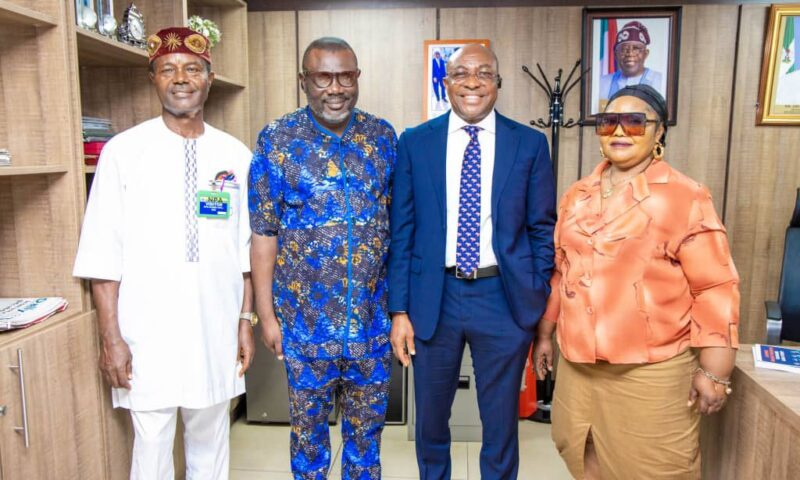
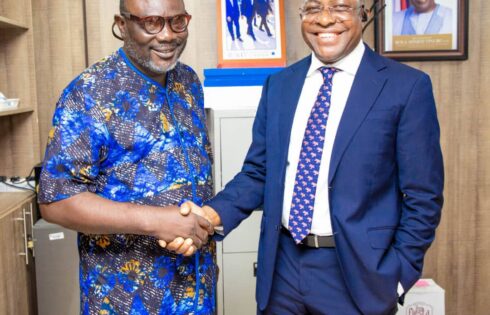
Picture: The officials in detention

Nigeria breaks the cycle: secures IMO Category C seat after multiple failed bids 

By Foster Obi


Nigeria has finally clinched a seat in Category C of the International Maritime Organization (IMO) Council for the 2026–2027 biennium, a breakthrough that ends years of failed attempts and marks the country’s most significant diplomatic comeback in the maritime sector in over a decade.
The victory, announced during the Assembly’s Council elections, elevates Nigeria back into the powerful policymaking circle that shapes global maritime regulations, safety standards, and the future of international shipping.
While headlines will simply celebrate the win, the deeper story is Nigeria’s long and frustrating history of unsuccessful bids. For several cycles, Nigeria campaigned vigorously but consistently fell short, losing its place as other African and Middle Eastern countries consolidated their alliances and sharpened their diplomacy.
Maritime analysts recall that Nigeria’s last successful election was in 2009; subsequent attempts, including those in 2011, 2013, 2015, 2017, 2019, 2021, and 2023, ended in disappointment, often by narrow margins. Over time, the country’s credibility in the IMO system began to erode, with delegates quietly questioning whether Nigeria still had the strategic coordination to win multilateral contests.
But 2025 changed the narrative. The turning point came under the leadership of the Minister of Marine and Blue Economy, Adegboyega Oyetola, who launched the most structured, targeted, and professional IMO campaign Nigeria has run in years.
Instead of the old practice of last-minute lobbying and bloated delegations, the 2025 campaign adopted:
Bilateral shuttle diplomacy to key IMO member states
Technical positioning, highlighting Nigeria’s leadership on Gulf of Guinea maritime security
A unified national delegation, ending the previous era of inter-agency fragmentation
Evidence-based engagement, showcasing port reforms, deep blue security architecture, and inland waterways development
A quiet African bloc consolidation, which analysts say was decisive
Inside the IMO corridors in London, Nigeria was no longer seen as campaigning for prestige but for a country returning to play a serious role in global maritime governance.
The IMO Assembly elected 20 countries into Category C, reserved for states with significant maritime interests not captured under categories A or B.
Category C includes:
Bahamas, Belgium, Chile, Cyprus, Egypt, Finland, Indonesia, Jamaica, Malaysia, Malta, Mexico, Morocco, Nigeria, Peru, Philippines, Qatar, Saudi Arabia, Singapore, South Africa, Türkiye.
This group reflects a balance of regional representation and strategic maritime influence. Nigeria’s inclusion restores West Africa’s weight in IMO decision-making and reaffirms the country’s relevance in global shipping governance.
Securing a Category C seat gives Nigeria the following opportunities: A direct vote on key IMO policies
A platform to influence safety, pollution, and trade rules affecting Nigerian ports and shipping
Leverage to negotiate technical assistance and capacity-building programs
Opportunity to champion African maritime security and trade corridors
It also strengthens the Marine and Blue Economy Ministry’s strategic agenda to grow Nigeria’s shipping participation, expand cabotage implementation, modernize ports, and deepen the blue economy.
What stands out in this election is not just the win, but the resilience behind it. Nigeria entered this race carrying the baggage of numerous defeats. Yet the 2025 campaign proved that global maritime diplomacy rewards coherence, preparation, and seriousness, qualities that were missing for many years.
By winning, Nigeria has not only re-entered the room but has reopened a door that had seemed permanently shut.
The newly elected Council will meet for its 136th session on 4 December to elect its Chair and Vice Chair for the new biennium — and for the first time in years, Nigeria will be there as a voting member, not an observer. This is not just a victory. It is a reset.

Picture: Marine and Blue Economy Minister Adegboyega Oyetola

DR. BONIFACE ANIEBONAM: THE MAN WHO TURNED MARITIME INTO A MOVEMENT

…Adapted from a Tribute by Hon. Patrick Ezegbudo(Nze Agbalanze)


Picture: Dr. Boniface Okechukwu Aniebonam (Ozo Ebubechukwu Umuawulu, Eze-Oba Nri


By Foster Obi

From the gentle valleys and fertile hills of Umuawulu, where grace meets greatness and destiny takes form, emerged a man whose vision and courage reshaped Nigeria’s maritime landscape in ways that continue to inspire new generations. Dr. Boniface Okechukwu Aniebonam (Ozo Ebubechukwu Umuawulu, Eze-Oba Nri) stands today not just as a towering figure in the maritime sector, but as a national asset whose ideas have transformed an entire industry.

A Visionary Who Rewrote the Rules

Few Nigerians have influenced the maritime and logistics ecosystem as profoundly as Dr. Aniebonam. As the founding spirit behind the **National Association of Government Approved Freight Forwarders (NAGAFF), he championed professionalism, discipline, and advocacy at a time when the sector was largely unstructured.

He gave freight forwarders a voice.

He gave the industry a compass.

He gave Nigeria a roadmap.

Through NAGAFF, he introduced reforms that strengthened stakeholder engagement, elevated standards, and empowered thousands of practitioners to see themselves not just as port users, but as contributors to the national economy.

A Mind Far Ahead of His Time

Long before the term “blue economy” entered the national conversation, Dr. Aniebonam had been articulating its importance. Long before the current push for port automation, multimodal transport, corridor efficiency, and trade facilitation, he had already laid the intellectual foundation and pushed the conversation into national consciousness.

His ideas have consistently proven prophetic.

His advocacy remains unmatched.

His influence continues to shape policy direction.

A Builder, Mentor, and Thought Leader

Beyond his institutional achievements, Dr. Aniebonam is a mentor to many leaders, young freight forwarders, policymakers, and maritime professionals who have benefited from his guidance and generosity.

His leadership style is marked by clarity, calm persuasion, and an unwavering commitment to integrity.

His traditional titles, Ozo Ebubechukwu Umuawulu and Eze-Oba Nri, reflect not only honour, but responsibility and service to his community.

A Living Archive of Maritime Knowledge

Dr. Aniebonam’s contributions to Nigeria’s port and trade ecosystem are not just historical, they are ongoing. He remains a reference point for maritime policy, a respected voice in national discourse, and a steady compass for those navigating the complex waters of the industry.

Institutions rely on his experience.

Stakeholders value his counsel.

Nigeria continues to draw from its deep reservoir of insight.

Honouring a Maritime Icon in His Lifetime

This tribute celebrates a man who has not only built institutions but continues to nurture them; a man whose ideas do not fade but gain relevance with each passing year; a man whose legacy is not in the past tense, but alive, active, and evolving.

Dr. Boniface Aniebonam is a reminder that one visionary, driven by courage and conviction, can transform an entire sector. And he is still doing so.