Dangote Sugar grows revenue to N626bn in Q3

Dangote sugarDangote Sugar Refinery Plc has reported revenue of N626.24bn for the nine months ended September 30, 2025, representing a 29 per cent increase from N484.43bn recorded in the corresponding period of 2024.

The company’s unaudited financial statement, filed with the Nigerian Exchange Limited and made available to our correspondent on Sunday, showed that despite the revenue growth, Dangote Sugar posted a loss after tax of N10.59bn for the period under review, compared to an N184.36bn loss recorded in the same period of 2024.

The company attributed the decline in losses to improved operational efficiency, a reduction in finance costs, and recovery from prior fair value losses on assets.

Gross profit rose significantly to N90.06bn in 2025 from N19.82bn in 2024, reflecting higher sales volume and improved cost management, while administrative expenses climbed to N20.53bn from N11.83bn.

Finance income dropped to N3.34bn from N6.93bn, while finance cost reduced to N95.59bn from N300.17bn in the corresponding period of 2024, leading to a smaller net finance loss of N92.25bn compared to N293.25bn last year.

Dangote Sugar recorded an operating profit of N81.12bn in the period under review, compared to N8.16bn in the same period of 2024.

The company’s total assets stood at N1.02tn as of September 2025, slightly lower than N1.05tn reported at the end of December 2024. Total equity attributable to shareholders declined to N198.56bn from N212.28bn, while total liabilities were valued at N817.15bn.

Despite the loss position, Dangote Sugar maintained a strong balance sheet, with property, plant, and equipment valued at N615.69bn and inventories at N130.5bn.

Earnings per share stood at a loss of 87 kobo, compared to a loss of N15.18 in the prior period, reflecting a significant improvement in the company’s financial position.

Minister disburses N100m grants to traders, artisans in Oyo

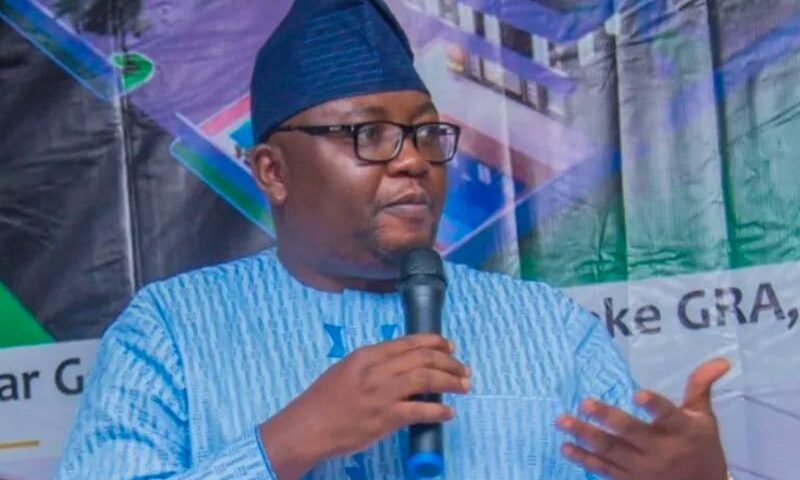
Adebayo AdelabuThe Minister of Power, Adebayo Adelabu, on Friday disbursed N100 million in business support grants to traders, artisans, and farmers in Oyo State.

The event, tagged ‘2025 Mega Empowerment and Economic Relief Programme Series,’ was held at the Bayo Adelabu Foundation House in Ibadan, the state capital.

The News Agency of Nigeria reports that Adelabu, a former Central Bank of Nigeria (CBN) deputy governor, is also one of the All Progressives Congress governorship aspirants in the state.

Adelabu, while disbursing the grants, said it was aimed at alleviating economic hardship confronting residents and strengthening small-scale businesses in the state.

The minister also said the gesture was part of his commitment to empowering entrepreneurs and supporting economic growth at the grassroots.

He, however, emphasised that the programme was not politically motivated but a demonstration of gratitude and service to humanity.

“This empowerment is not about politics. I am only thanking God for His mercy by giving back to society,” he said.

Adelabu acknowledged the economic challenges facing Nigerians and called for targeted interventions to support traders, artisans, and farmers affected by inflation and rising costs.

He urged citizens to remain hopeful and continue supporting President Bola Tinubu’s administration, assuring that the ongoing reforms would soon yield positive outcomes.

“President Tinubu is God-sent to Nigeria. Though things are tough now, Nigerians will soon reap the gains of their sacrifices,” he said.

A guest speaker at the event, Mr Olutayo Akinleye, lauded the minister’s effort, adding that such support would contribute largely to economic growth and entrepreneurial development.

Akinleye, a financial expert, advised beneficiaries on the need to utilise the grant judiciously, urging them to shun extravagant and frivolous lifestyles.

Beneficiaries expressed appreciation to Adelabu, noting that the financial support would boost their businesses and improve their livelihoods.

UBA records N538bn profit after tax in Q3

United Bank for AfricaThe United Bank for Africa Plc has reported a profit after tax of N537.53bn for the third quarter of the year.

This reflects a 2.3 per cent rise from N525.31bn recorded in the same period of 2024.

According to a statement made available to Saturday PUNCH on Friday, the pan-African financial institution, in its audited results filed with the Nigerian Exchange Limited on Thursday, said it also recorded steady growth across key performance indicators, consolidating its position as one of Africa’s strongest and most diversified banking groups.

“UBA’s gross earnings grew by 3.0 per cent to N2.469tn, up from N2.398tn in September 2024.

“Similarly, net interest income rose by 6.2 per cent to N1.172tn from N1.103tn in the corresponding period of 2024,” the statement said.

The bank, however, recorded a marginal 4.1 per cent decline in profit before tax, which stood at N578.59bn, compared to N603.48bn posted in the previous year.

Its total assets increased by 7.2 per cent to N32.492tn, compared to N30.323tn recorded as of December 2024.

“Total deposits also rose by 7.7 per cent, from N24.651tn to N26.54tn within the same period.

“UBA’s shareholders’ funds remained robust at N4.301tn, a 25.8 per cent increase from N3.418tn as of December 2024, indicating a strong capacity for internal capital generation and sustainable growth,” it added.

Commenting on the performance, the Group Managing Director/Chief Executive Officer, Oliver Alawuba, said the results reflected the bank’s resilience and the strength of its diversified operations across markets.

“We delivered solid performance supported by prudent balance sheet management, innovation, and a well-diversified earnings base across all our markets,” he was quoted as saying.

Alawuba emphasised that the bank’s consistent performance demonstrated its commitment to sustainable growth despite macroeconomic headwinds.

“With profit after tax rising to N538bn from N525bn, UBA continues to reflect consistent earnings momentum and its commitment to sustainable growth, with strength in Nigeria, its African network, and global presence,” he added.

The GMD highlighted the bank’s recent capital-raising efforts, explaining that the successful completion of the final phase of its Rights Issue had bolstered its capital base.

“I am pleased to report that we have made significant progress on our capital raising, as part of the mandated industry-wide recapitalisation exercise, with the successful completion of the final Phase II of the Rights Issue. This has strengthened our capital base and will support the continued, prudent expansion of our operations across our markets,” Alawuba explained.

He reaffirmed the bank’s commitment to disciplined execution and strategic growth, assuring shareholders of sustained value creation.

UBA’s Executive Director, Finance and Risk, Ugo Nwaghodoh, said the Group delivered steady earnings growth, driven by a rise in interest income and net interest income.

“Gross earnings rose to N2.47tn, supported by a 10.1 per cent increase in interest income and a 6.2 per cent uplift in net interest income,” he said.

Nwaghodoh added that total assets grew by 7 per cent to N32.5tn, supported by focused deposit mobilisation and increased investment in earning assets.

“Shareholders’ funds expanded by 26 per cent to N4.3tn, underscoring the continued confidence of investors in the Group’s strategy, while capital adequacy and liquidity ratios remain well above regulatory thresholds and provide significant buffers to support continued growth,” he explained.

Nwaghodoh assured investors that the bank remains focused on sustaining profitability and expanding its digital income streams.

He said, “We remain focused on sustaining profitability, expanding our digital income streams, and delivering long-term value to our shareholders.”

Transcorp President urges faster energy access to drive Africa’s growth

Owen OmogiafoThe President/Group Chief Executive Officer of Transcorp, Dr Owen Omogiafo, has called for urgent action to expand energy access across Africa, warning that the continent must scale up its energy supply quickly to drive economic growth and inclusion.

Omogiafo made these remarks at the ninth edition of the Future Investment Initiative held in Riyadh, Saudi Arabia, where she joined global energy leaders from Europe, the United States, the Middle East, and Asia in a plenary session on ‘Board of Changemakers: The Energy Trilemma.’

Transnational Corporation Plc, which she presides over, is an indigenous conglomerate with investments in the power, hospitality, and energy sectors.

“I am from Nigeria, and my company is driving energy transformation. What we are looking at is not so much about whether we are transitioning; it is about creating greater access to energy for all. The gap is huge, and we all need to be conscious of it in energy conversations,” she said, highlighting Africa’s energy deficiency challenge.

Dr Omogiafo noted that the continent bears the brunt of global energy poverty: “It will interest you to know that about 70 or 80 per cent of people with no access to electricity are in Africa, which is very disturbing, I believe. Today, the world is concerned about immigration. The people who are migrating are not migrating because they hate their homes or because they hate their families, but because they feel they have to.

“Affordability is right up there, and I will also tell you; the numbers we run in Nigeria show that renewable is not cheaper for us. The only renewable that is cheaper today is hydro, and that’s because it was built a long time ago; the investment is already there, and we have got the water. But when I look at the statistics of my country, Nigeria, just 12% of the power that goes to the grid comes from hydro; the remainder is from fossil, gas-fired power plants.”

Reflecting on the panel discussion, Dr Omogiafo said Africa must adopt a pragmatic approach to energy development.

She said, “It is not either-or; we (Africa) do need to expand access, leveraging technologies including off-grid and mini-grid sources to ensure that the continent, which has the largest number of young people in the world, is included in the energy solutions, with industrialisation at the core of it. We must secure affordable power today to drive the development that will enable the sustainable energy systems of tomorrow.”

Dr Omogiafo’s remarks at FII9 reinforce Transcorp Plc’s role as a leading advocate in Africa’s energy transformation agenda and its commitment to improving lives and transforming Africa through strategic, sustainable investments.

Glo customers get more data without price hike

Globacom logoTelecommunications giant Globacom has unveiled revised data bundles that give subscribers more data volume at the same affordable prices, further demonstrating the company’s commitment to delivering superior value and satisfaction to its customers.

In a statement on Thursday, the company said the revised Glo Data Bundles are improved versions of its existing daily, weekly, and monthly plans, offering subscribers larger data volumes without increasing costs. The updated packages provide greater browsing power and flexibility for streaming, gaming, social media, video calls, and other online activities.

“For daily users, the N100 plan has been enhanced from 105MB to 125MB, giving light internet users more room to browse, chat, and stream short content conveniently,” the company said.

The weekly plans have also been upgraded to meet the needs of moderate data consumers. The N1,500 bundle, for instance, now offers 6GB instead of 5.9GB, enabling users to enjoy uninterrupted access to their favourite online services for a longer period.

“For customers who rely heavily on the internet, the monthly bundles provide even more value. The N2,000 plan now delivers 6.25GB, while the N10,000 plan has been increased from 38GB to 42GB, allowing users to do more, from video streaming and downloads to remote work,” the telco noted.

Students are also set to benefit from the revised Campus Booster Plan, which now comes with higher data allocations to keep them connected to their academic resources and social platforms on campus.

Globacom explained that the revised bundles are available to all Glo customers, prepaid, postpaid, and hybrid, and can be easily purchased by dialling *312#, using the Glo Café app on Android and iOS.

The company added that the bundles can be used for all forms of internet access. Subscribers can also share or gift their data through *312# or the Glo Café app. Customers will continue to receive usage notifications when their data reaches 75 per cent and 100 per cent, helping them track consumption effectively.

Unused data will be rolled over automatically when a customer renews before expiry or buys another bundle within the grace period, which ranges from one to seven days depending on the plan. Multiple data subscriptions are also supported, giving users the freedom to manage more than one active bundle at a time.

Globacom encouraged all customers to take advantage of the revised data bundles, which combine affordability, wider coverage, and greater value, ensuring every subscriber enjoys more data without paying more.

Lagos Safety Commission disowns woman in viral video accused of extortion

Lagos State Safety Commission has distanced itself from a woman caught in a viral video allegedly extorting money from residents in Oworonshoki while claiming to be a staff member of the agency.

In a statement released on Thursday, the commission’s Director of Public Affairs, Mrs Okoh Adewunmi, clarified that the woman, identified as “Mariam,” has no affiliation whatsoever with the agency.

“The attention of the Lagos State Safety Commission has been drawn to a viral video circulating on social media, in which one Mariam claims to be a staff member of the commission and is alleged to have collected bribes from unsuspecting members of the public in the Oworonshoki area of Lagos State,” the statement read.

“We wish to categorically state that the said Mariam is not and has never been an employee of the Lagos State Safety Commission. Her actions are not in any way connected to the commission and do not represent our values or operations,” Adewunmi added.

The agency reiterated its zero-tolerance stance toward corruption, extortion, and all unethical conduct. It also urged residents to remain vigilant and to report any impostors or fraudulent activities through its verified communication channels.

A video shared by Lagos Reporters and reviewed by our correspondent showed the woman wearing a reflective vest branded with the Lagos State logo. She was confronted by residents for allegedly demanding illegal payments during supposed “safety inspections.”

In the footage, the woman admitted to receiving money from residents who lacked the required documentation, claiming they preferred to “settle” her instead of visiting the commission’s office.

The impostor allegedly collected as much as N300,000 from residents under the guise of conducting official inspections, with none of the funds remitted to the state government.

Oando records 164% surge in profit after tax

Oando-logoIndigenous energy group, Oando PLC, has recorded a 164 per cent increase in Profit After Tax at the end of the third quarter, which rose to N210bn from N76bn in the same period of 2023.

This was indicated in a statement from the firm on Thursday, following the release of its unaudited results for the nine months ended September 30, 2025, which it filed with the Nigerian Exchange and Johannesburg Stock Exchange.

Oando’s performance was driven by stronger production volumes and operational efficiency. However, the group’s revenue declined by 20 per cent year-on-year to N2.5tn from N3.2tn in 2024, a decline which the firm primarily linked to reduced gasoline imports following the ramp-up of the Dangote Refinery.

Gross profit also slid by 42 per cent to N113bn, representing a 42 per cent decline and reflecting shifts in market dynamics and the Group’s evolving segment mix.

Commenting on the results, Group Chief Executive, Oando PLC, Wale Tinubu, stated, “In the first nine months of 2025, we consolidated the gains achieved following our acquisition of Nigerian Agip Oil Company’s assets last year. Our assumption of operatorship has been transformational, granting us the agility to act decisively and execute with precision in driving production growth and operational efficiency.”

He added that the Group achieved a 59 per cent year-on-year increase in crude oil and gas production, now averaging 38,121 boepd, underscoring the impact of the NAOC acquisition and providing clear evidence of the dawn of unlocking the tremendous value its reserves possess.

In the period under review, Oando upsized its Reserve-Based Lending facility to $375m, strengthening its financial flexibility and supporting the accelerated development of its 1 billion barrels of oil equivalent upstream portfolio. The company also renegotiated key credit facilities on more favourable terms, extending repayment periods to free up liquidity and fund its ongoing drilling programme.

The indigenous energy giant said group production averaged 38,121 barrels of oil equivalent per day (boepd), up 59 per cent year-on-year, in line with its full-year guidance. The performance was driven by the consolidation of its NAOC joint venture interest and improved asset uptime across its operated portfolio.

Oando added that the revamp of its NGL processing plant played a key role in the improved performance, delivering 82 per cent operational uptime and boosting recovery and reliability across production assets. The company also completed the Obiafu-44 gas-condensate well, which was brought onstream in October, and advanced surface facility upgrades to minimise downtime and enhance flow efficiency.

In a bid to expand its regional and global footprint, the company was awarded operatorship of Block KON 13 in Angola, marking its strategic entry into the Kwanza Basin and was selected as the preferred bidder for the Guaracara Refinery in Trinidad & Tobago, signalling its entry into the Caribbean downstream market.

In the downstream, Oando’s trading subsidiary lifted 21 crude cargoes (19.8 MMbbl), up from 15 cargoes (16.7 MMbbl) in the same period last year, following a deliberate strategic pause as the Division rebalanced its portfolio towards higher-margin crude and gas trading opportunities.

In its clean energy division, the company advanced its electric mobility, solar, and recycling initiatives, progressing development of a 1.2GW solar PV assembly plant, completing a techno-economic study for a 6MW geothermal pilot, and securing land for a 2,750-ton-per-month PET recycling facility.

During the review period, Mrs Folashade Ibidapo-Obe was appointed Chief Compliance Officer and Company Secretary, strengthening Oando’s governance and compliance framework. The company also completed the first tranche of its 1.28 billion-share distribution programme, delivering a 5.33 per cent dividend yield to shareholders, its first direct payout in years, as part of a broader plan to restore sustainable shareholder returns.

Looking ahead, Oando maintains its full-year production guidance of circa 40,000 boepd, with capital expenditure projected at $120–130 m, focused on drilling, infrastructure optimisation, and ESG projects.

Access Holdings Records N3.9 Trillion Gross Earnings In Nine Months


Access Holdings PLC (“the Group” or “the Company”) today announced its nine-month ended September 30, 2025 (“Q3 2025”) results, recording gross earnings of ₦3.9trillion, which represented a rise by 14.1% year-on-year over ₦3.4trillion as at Q3 2024.

This performance was driven by sustained growth in both interest and fees and commission, reflecting the strength of the Group’s diversified earnings base and improved performance from core operations across its banking and non-banking businesses.

Maintaining the same momentum, gross earnings rose by 56.2% quarter-on-quarter from ₦2.5trillion as at Half Year (H1) 2025.

Interest income rose by 21.1% year-on-year to ₦2.9 trillion in Q3 2025, compared to ₦2.4 trillion in Q3 2024. Net interest income also increased by 48.9% to ₦1.3 trillion from ₦845 billion in the same period. This performance was driven by loan book expansion, reflecting our disciplined risk management approach and a strategic focus towards higher-yielding, quality assets to strengthen portfolio returns.

On a quarter-on-quarter basis, interest income and net interest income grew by 42.1% and 27.8%, respectively, from ₦2.0 trillion and ₦984 billion in H1 2025.

There was 44.3% growth in net fee and commission to N476billion in Q3 2025 from N330billion in Q3 2024, reflecting higher transaction volumes and increased customer activity across digital and payment channels across both periods.

On a quarter-on-quarter basis, net fee and commission income also increased by 100.8% from N237billion in H1 2025.

While total non-interest income declined marginally by 8.1% to ₦872 billion in Q3 2025 from ₦984trillion in Q3 2024, the Group’s growth momentum from core operations continues to support overall earnings trajectory.

Operating income rose 18.8% to ₦2.13 trillion in Q3 2025 from ₦1.8trillion in Q3 2024.

Impairment on loans increased by 141.5% to N350billion as of Q3 2025 from N145billion in Q3 2024.

Operating expenses increased marginally by 6.7% in Q3 2025 to N1.2trillion from N1.1trillion in Q3 2024. The cost-to-income ratio (CIR) improved to 54.6% in Q3 2025 from 60.8% as at Q3 2024, as revenue growth outpaced operating expenses. We expect cost-to-income ratio to stay moderated from ongoing efficiency initiatives, cost optimization measures, and stronger revenue across the Group.

Profit before tax (PBT) increased by 10.4% to N616billion in Q3 2025 from N558billion in Q3 2024. Profit after tax moderated to N447billion in Q3 2025 from N458billion in Q3 2024.

Compared to H1 2025 performance, profitability demonstrated resilience, as profit before tax (PBT) increased by 91.9% from N321billion in H1 2025 YTD to N616billion in Q3 2025. Profit after tax (PAT) also showed improvement in the period with a 107.9% increase to N447billion in Q3 2025 from N215 billion as at H1 2025 YTD.

The Group’s balance sheet increased with total assets growing by 25.8% to N52.0trillion in Q3 2025 from N41.5trillion in FY 2024. The growth in balance sheet was supported by customer deposits, which grew by 47.0% to N33.1trillion in Q3 2025 from N22.5trillion in FY 2024. Loans and advances increased by 19.7% to N15.6trillion in Q3 2025 from N13.0trillion in Q3 2024. The Group is positioned to unlock revenue synergies, enhance cross-border collaboration, and drive sustainable earnings growth.

The Group’s strong performance was largely driven by its non-Nigerian subsidiaries, which together contributed over 50% of consolidated results. These subsidiaries continued to deliver strong growth across key metrics, reflecting the benefits of diversification and deepening franchise strength across our African markets. In comparison, the Nigerian operations experienced underperformance during the period, attributable to changing macroeconomic conditions, inflationary pressures, and continued regulatory adjustments. Despite these headwinds, the Group’s diversified structure continued to provide stability and resilience.

The return on average equity (ROAE) stood at 15.4% in Q3 2025, down from 22.2% in Q3 2024, while return on average assets (ROAA) also moderated to 1.3% in Q3 2025 from 1.8% in Q3 2024. The cost-to-income ratio (CIR) improved to 54.6% in Q3 2025 from 60.8% as at Q3 2024.

Looking ahead, Access Holdings will continue to strengthen our franchise across all our markets and businesses, deepen operational resilience, and create sustainable value for all our stakeholders.

SEC Partners CBN, EFCC To Track, Freeze Illicit Digital Wallets

 The Securities and Exchange Commission (SEC) has announced a collaboration with the Central Bank of Nigeria (CBN) and the Economic and Financial Crimes Commission (EFCC) to track and freeze illicit digital wallets used for money laundering and other financial crimes.
 The Director-General of the Commission, Dr. Emomotimi Agama, disclosed this in Abuja while addressing participants at the Abuja Journalists Academy during a lecture on “The Regulation of Digital Assets and Virtual Asset Service Providers in Nigeria.”
Represented by the Head External Relations Department of the SEC, Mrs. Efe Ebelo, Agama said the partnership marked a major step in protecting investors and strengthening integrity in Nigeria’s fast-growing digital finance ecosystem.
“To strengthen enforcement, the SEC is working closely with the Central Bank of Nigeria and the Economic and Financial Crimes Commission to freeze illicit digital wallets and recover criminal proceeds. Our goal is to ensure that innovation serves progress, not predation,” he said.
 The SEC boss noted that Nigeria ranks among the world’s top adopters of digital assets, with more than one-third of the population involved in crypto-related activities.
This, he said, reflects the creativity of Nigerian youth, the spread of mobile technology, and the drive for financial inclusion.
However, he warned that the rapid growth of digital assets has also opened opportunities for abuse.
  He listed common threats such as crypto scams, fake wallet applications, phishing attacks, and ransomware schemes, which have defrauded many unsuspecting citizens.
“Without strong regulation, innovation can quickly become vulnerability,” he cautioned.
“Regulation is not about restriction; it is about building trust and ensuring that innovation strengthens our economy rather than weakens it.”
 To address these challenges, the SEC has established a detailed regulatory framework for Virtual Asset Service Providers (VASPs) under its 2022 Rules on the Issuance, Offering, and Custody of Digital Assets.
 The framework rests on three pillars of licensing, compliance and transparency.
Agama said these measures were part of the Commission’s broader commitment to build a transparent and trustworthy digital asset market that protects investors and discourages criminal activities.
Beyond issuing regulations, he said the SEC is also deploying modern technology to monitor transactions in the digital space. A
 Agama said the Commission now uses blockchain analytics tools and artificial intelligence (AI) to trace transactions, detect fraud, and improve cybersecurity.
 “We are leveraging blockchain analytics, AI, and advanced monitoring systems to strengthen our supervisory capacity,” he explained. “This will help us respond faster to suspicious transactions and protect market integrity.”
 He added that the Commission’s collaboration with the CBN and EFCC would enhance coordination between financial regulators and law enforcement agencies, allowing them to act swiftly against cross-border financial crimes.
 Dr. Agama also placed Nigeria’s regulatory approach within a global context. He said the FATF, through its Recommendation 15, now requires all VASPs worldwide to implement AML and CFT controls.
 He cited other jurisdictions such as the European Union, with its MiCA framework, and the United States, where enforcement against unregistered exchanges has intensified.
“The message globally is clear- digital finance must be as transparent, accountable, and investor-friendly as traditional finance,” the SEC DG stated.
According to Agama, the SEC is committed to maintaining a regulatory balance that supports innovation while safeguarding the financial system from abuse.
“If regulators clamp down too hard, innovation migrates offshore; if they regulate too softly, risks multiply,” he noted. “Our task is to find the right balance, one that encourages creativity while protecting Nigerians from exploitation.”
 He stressed that digital assets were no longer a fringe concept but a structural pillar of modern finance, reshaping markets and redefining trust, ownership, and value exchange globally.
 Agama concluded by reaffirming the SEC’s commitment to building a digital finance ecosystem grounded in ethics and transparency.
“The future of finance is digital, but its foundation must remain ethical, transparent, and trustworthy,” he said. “Trust is the ultimate currency, and as regulators, our highest duty is to preserve it.”
 He urged Nigerian innovators, fintech firms, and investors to embrace responsible innovation, assuring them that the SEC’s goal is to create a secure environment that promotes financial inclusion, investor protection, and national development.

Reps seek FG, CBN support for cassava farmers

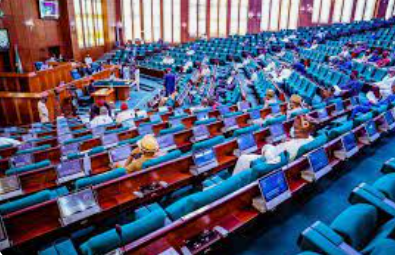
House of RepresentativesThe House of Representatives has called on the Federal Government, through the Central Bank of Nigeria, to ensure that cassava farmers have easy access to short-term loans as part of efforts to strengthen food security and expand the agricultural value chain.

The lawmakers also urged President Bola Tinubu to reconstitute the defunct Presidential Committee on Cassava Initiative to enhance the welfare of cassava farmers and reposition the subsector for export competitiveness.

The resolution followed the adoption of a motion sponsored by Canice Nwachukwu (APC, Imo) during Wednesday’s plenary session.

Nwachukwu noted that cassava cultivation had become one of Nigeria’s most organised and promising agricultural ventures, with widespread processing for food products, livestock feed, and industrial applications.

He highlighted that cassava by-products, such as garri, had become major export commodities, contributing significantly to foreign exchange earnings.

Cassava, grown in all 36 states and the Federal Capital Territory, serves multiple economic and nutritional purposes.

Beyond its use as food, cassava peels and starch derivatives are valuable in livestock feed production, pharmaceuticals, and industrial manufacturing.

Nwachukwu said easy access to short-term loans and modern processing equipment would revolutionise cassava farming and enhance farmers’ income and productivity.

“If cassava processing machines and short-term loans are provided, farmers can transform cassava into garri and fufu hygienically and efficiently.

“This will boost market value, improve food quality, and help farmers contribute more to national GDP,” he said.

Nwachukwu added that Nigeria could achieve greater economic diversification by harnessing cassava’s export potential, using it as a viable alternative to crude oil for foreign exchange earnings.

He, however, expressed concern that despite being one of Africa’s largest cassava producers, Nigeria still processed about 90 per cent of its yield locally, largely at the cottage level using rudimentary technology.

“Most processors are women who work under poor hygienic conditions with limited access to credit and modern equipment. These challenges result in low productivity, poor packaging, and minimal profits along the value chain,” he lamented.

Following extensive deliberations, the House urged the CBN to direct the Bank of Agriculture, Bank of Industry, and other financial institutions to create mechanisms that would guarantee cassava farmers easy access to short-term credit facilities.


The lawmakers also called on the Federal Government to revive the Presidential Committee on the Cassava Initiative Programme (popularly known as the Composite Cassava Flour Initiative of 2002) to promote value addition, research, and farmer support.

Additionally, the House mandated the Federal Ministry of Agriculture and Food Security to embark on extensive training for peasant farmers on cassava production, processing, and packaging to improve standards and competitiveness.

The committees on Agricultural Production and Services and Legislative Compliance were directed to monitor implementation and report back within four weeks for further legislative action.