CBN urged to introduce N10,000, N20,000 single notes

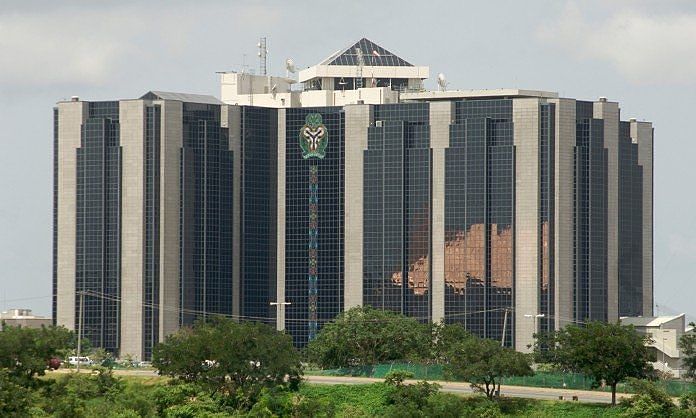
CBN headquartersA new economic review by Quartus Economics has urged the Central Bank of Nigeria to introduce higher-value currency notes such as N10,000 and N20,000 bills to restore the naira’s portability and reduce the rising cost of cash transactions.

The report, titled “Is Africa’s Eagle Stuck or Soaring Back to Life?”, warned that the naira’s continued depreciation had rendered the N1,000 note, the country’s highest denomination, practically obsolete in terms of purchasing power.

“To make the naira portable again, Nigeria can introduce higher-value bills, e.g., N10,000 or N20,000 notes, or redenominate the currency entirely,” the report stated.

According to the analysts, a N5,000 note that would have been introduced in 2012 would now be equivalent to a single N50,000 note today, reflecting the 94 per cent decline in the naira’s real value over the last two decades.

It added that the notion that introducing higher-value notes could worsen inflation was a “myth unsupported by evidence,” explaining that inflation is driven by cost-push and demand-pull factors, not by currency denomination.

“Inflation is cost-push or demand-pull. Neither is related to currency denomination. Instead, countries introduce higher notes to maintain portability after an era of currency depreciation.

“Countries introduce higher-value notes to maintain portability after a period of significant currency depreciation, not to trigger inflation,” the report clarified.

When the N1,000 note was introduced in 2005, it was equivalent to nearly $7 at the official exchange rate. Today, it is worth less than 60 US cents, underscoring the naira’s sharp erosion in value.

Quartus Economics noted that this depreciation has made everyday transactions burdensome, particularly in the informal sector, where cash remains dominant. Traders, artisans, and rural consumers now carry large volumes of cash for transactions that could easily be done with a few higher-value notes.

The report also pointed out that the cost of printing, transporting, and securing lower-value notes had become prohibitive for the CBN.

“Outside the formal sector and the urban elite, the naira’s heavy weight is a drag on the economy and slows down growth. Besides, the cost of printing and transporting today’s low-value notes is prohibitive,” the report said.

It argued that the introduction of N10,000 and N20,000 notes, or a broader redenomination exercise, would improve transaction efficiency, reduce printing costs, and align Nigeria’s currency structure with that of other emerging economies.

The PUNCH recalls that the CBN once proposed introducing a N5,000 note in 2012 under the then Governor, Sanusi Lamido Sanusi, but the plan was dropped after public opposition.

Quartus Economics now argues that the same policy logic remains valid more than a decade later, given the naira’s steep decline.

The firm said the proposed measure was not about “printing more money”, but about modernising the naira’s denominations to reflect current economic realities and make transactions more practical.

According to the report, the 94 per cent fall in the naira’s value was calculated using the cost of two essential items, a kilogramme of imported rice and a one-way flight ticket from Lagos to Abuja.

From about N150 per kilogram of rice in 2005, the price now averages N2,500, while the cost of a local flight has risen from N12,000 to more than N150,000.

NGX Group market capitalisation soars 37.7% to N141.75tn

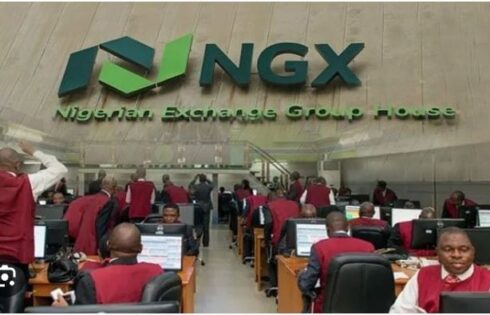
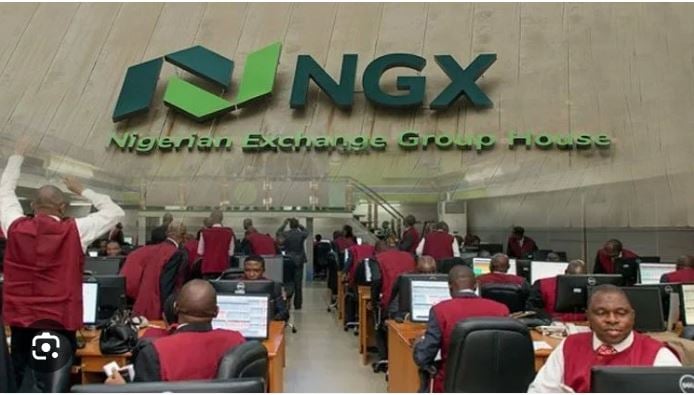
The Nigerian Exchange Group has recorded a 37.7 per cent growth in market capitalisation, rising to N141.75tn as of September 2025 from N102.94tn in the same period of 2024.

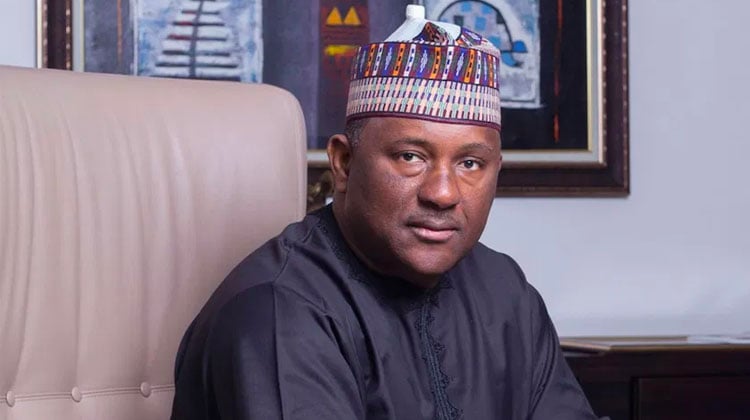
This performance reflects growing investor confidence and the Group’s continued focus on innovation, technology, and sustainability under the leadership of its Group Managing Director and Chief Executive Officer, Temi Popoola, who said the growth demonstrates that the strength of Nigeria’s capital markets cannot be separated from the strength of the communities they serve.

“For us at NGX Group, building strong capital markets goes hand in hand with building strong communities, because inclusive growth and social well-being are the true foundations of a resilient economy,” he said.

In line with this vision, NGX Group has deepened its commitment to social impact through its flagship initiative, Project BLOOM (Bringing Life to Our Overlooked Minors). The programme, implemented in partnership with the Lagos State Government and the Health Emergency Initiative, has reached over 200 children and 180 caregivers in underserved communities like Ajegunle and Yaba, providing therapeutic food, medical care, and nutrition education.

The Group also continues to drive market inclusivity through digital innovation. Its e-offering platform, NGX Invest, has enabled corporates to raise over N2tn in capital, making public offers and rights issues more accessible to retail investors nationwide.

Beyond social and digital transformation, NGX Group has advanced its sustainability agenda through the Nzero initiative, which helps listed companies measure, report, and reduce carbon emissions in line with global sustainability standards.

Popoola noted that the Group’s focus on environmental, social, and governance principles has strengthened market transparency and long-term investor confidence.

He said, “Our vision is to create markets that thrive in harmony with society and the environment. We are judged not just by the wealth we help create but by how widely that wealth is shared and how sustainably it is generated.”

The NGX boss added that through initiatives like Project BLOOM and NGX Invest, the Group aims to bridge the gap between market performance and social development, reinforcing its position as both a driver of capital formation and a catalyst for community transformation.

Manufacturers record fragile growth as credit drops N7.72tn

MAN logo manufacturers Association of Nigeria

Manufacturers Association of Nigeria has stated that credit to the manufacturing sector decreased by 9.5 per cent to N7.72tn as of March 2025, down from N8.53tn in December 2024, amid a fragile recovery that requires urgent policy intervention to sustain.

The association, which released its findings in the Third Quarter 2025 Manufacturers CEO’s Confidence Index report in Lagos on Tuesday, said the decline in credit, high energy costs, and foreign exchange liquidity constraints continued to weigh on the performance of the real sector despite modest gains in output and business confidence.

Director General of MAN, Segun Ajayi-Kadir, said the sector’s resilience remained fragile as key constraints persisted. “High lending rates averaging 36.6 per cent, declining credit access of N7.72tn, and rising unsold inventories of N1.04tn continue to limit manufacturing performance,” he said.

Ajayi-Kadir stated that though capacity utilisation improved to 61.3 per cent in the first half of 2025, from 57.6 per cent in the second half of 2024, the gains were modest and could easily be eroded without decisive policy action.

“Our data show that the manufacturing sector is beginning to find its footing after a long period of turbulence. However, this recovery is fragile and could easily falter if we do not receive deliberate, industry-friendly interventions,” he said.

He urged the Federal Government to prioritise measures that would reduce energy costs, strengthen foreign exchange liquidity, and expand access to affordable credit to accelerate industrial growth.

According to MAN, manufacturing value added fell sharply to $25.36bn in 2024 from $55.9bn in 2023, as competitiveness weakened under soaring exchange rates, inflation, and interest rates. The association said manufactured exports rose to N803.8bn in Q2 2025, up from N294.4bn in Q1, showing some resilience despite macroeconomic headwinds.

The report also indicated that 18,935 jobs were lost in the first half of 2025, compared to 10,891 in the second half of 2024, as firms grappled with high input costs and foreign exchange scarcity.

MAN further noted that while the Manufacturers CEO’s Confidence Index recorded a modest rise from 50.3 points in Q2 2025 to 50.7 points in Q3 2025, the improvement was not enough to lift overall business conditions above the 50-point neutral threshold.

Ajayi-Kadir said, “The 0.4-point uptick in the MCCI is significant because it marks the second consecutive quarterly rise, signalling a cautiously improving perception among manufacturers. However, all current indices remain below 50 points, showing that the underlying challenges persist.”

He attributed the slight improvement to “a continuous disinflation trend and a more stable exchange rate”, but warned that high energy costs and disruptions in gas supply had constrained output in several subsectors.

MAN President, Francis Meshioye, in his remarks, described the modest rebound as evidence of “a gradual recovery”, but said the sector still faced “binding constraints” that must be addressed urgently.

Meshioye said, “The manufacturing sector is gradually inching towards recovery, as seen in the consistent increase in the index in Q2 and Q3. However, the top five manufacturing challenges outlined in the report demand urgent government attention to sustain this trend.”

He stressed the need for a private sector–driven industrial policy anchored on the proposed Nigeria First Policy and the forthcoming National Industrial Policy, to ensure alignment between policy intent and industrial realities.

The MAN chief also called on the Central Bank of Nigeria to deepen its recent rate cut, saying, “The time has come for the apex bank to introduce a bolder reduction that can meaningfully lower the cost of credit and stimulate real sector investment. Growth cannot thrive where capital remains prohibitively expensive.”

The association identified key improvements across six groups: Plastics & Rubber, Electrical & Electronics, Food & Beverages, Chemical & Pharmaceuticals, Textile & Footwear, and Basic Metal & Steel. These groups benefited from local raw material sourcing, stable polypropylene supply, fibre optic expansion, and easing foreign exchange pressure.

However, four other groups recorded declines due to high energy costs, gas supply disruptions, illegal logging, limited government patronage, and the influx of imported products.

Ajayi-Kadir concluded that sustaining the sector’s fragile rebound would require coordinated fiscal and monetary actions.

“Currency stability is more than a macroeconomic metric; it is a reflection of national resolve,” he said. “To secure the gains of stabilisation and accelerate prosperity, Nigeria must make manufacturing the nucleus of its growth strategy.”

Director of MAN Research and Economic Policy Division, Dr Oluwasegun Osidipe, presented the MAN Think Tank report alongside the MCCI. He urged the government to fast-track the implementation of industrial policies, tighten pipeline security to boost oil output, expand local refining capacity, and ensure disciplined tax enforcement ahead of the January 2026 tax reforms.

Court orders forfeiture of drug trafficker’s Lekki duplex

Federal High Court, LagosJustice Alexander Owoeye of the Federal High Court in Lagos has ordered the final forfeiture of a four-bedroom duplex with two sitting rooms and boys’ quarters in Lekki to the Federal Government after finding that it was used for illegal drug activities.

The judge, on Tuesday, ordered that the property located at Block 11, House 2, Mobolaji Johnson Estate, Lekki Phase 1, be permanently forfeited to the Federal Government following an application filed by counsel for the National Drug Law Enforcement Agency, Mr. Buhari Abdulahi.

Abdulahi told the court that the property belonged to a suspected drug baron currently resides in Canada, and was used as an operational base for trafficking Canadian Loud — a high-grade strain of cannabis sativa — into Nigeria.

“The property served as the operational base for Adebanjo’s illicit drug activities,” the NDLEA counsel said. “He purchased the house and used it to coordinate the storage, distribution, and sale of hard drugs smuggled into Nigeria from Canada.”

He informed the court that an interim forfeiture order had earlier been granted on March 20, 2024, and that, in compliance with the court’s directive, details of the property were published in the Daily Sun of May 20, 2024, and in the Vanguard of August 1, 2025, inviting any interested parties to contest the forfeiture.

“Despite the publications and adequate notice, no person or entity came forward to lay claim to the property or provide any explanation,” Abdulahi said, urging the court to grant a final forfeiture order.

He added that the application was brought under the NDLEA Act, which empowers the court to confiscate assets used in committing drug-related offences.

After reviewing the submissions and supporting documents, Justice Owoeye granted the final forfeiture order, describing the property and items within it as “instruments used in committing drug offences.”

“Having carefully examined the affidavit evidence and the unchallenged application by the NDLEA, this court hereby orders the final forfeiture of the property to the Federal Government of Nigeria,” the judge ruled.

According to an affidavit filed by Deputy Commander of Narcotics, Nasir Garba Bungudu, attached to the NDLEA’s Lagos Strategic Command, the agency had received intelligence in 2023 about a drug trafficking network smuggling Canadian Loud from Canada into Nigeria.

He said investigations traced the syndicate’s base to the Lekki property, which served as a warehouse and coordination centre for storage, financing, and distribution of the illicit drugs.

He said following weeks of surveillance, NDLEA operatives conducted a raid on February 5, 2023, during which they recovered 1.088 kilograms of Canadian Loud and arrested five suspects: Tijani Hakeem, Eric Makuo, Adaobi Fortune, Ahmed Jubril, and Ekwejunor Oritsematosan.

“Our investigation confirmed that the property was purchased and maintained with proceeds of drug trafficking,” Bungudu stated. “It was the central hub for the syndicate’s criminal operations.”

Four of the suspects were later convicted in Charge No. FHC/L/122C/2023 — FRN v. Tijani Oladapo Hakeem & 3 Ors after pleading guilty to drug trafficking charges.

The fifth suspect, Ekwejunor Oritsematosan, is still facing trial alongside Femaffix Global Services Limited in Charge No. FHC/L/501C/2023 for offences linked to the same cartel.

NDLEA investigators also established that Adebanjo, identified as the ringleader, purchased the Lekki property to house his associates and manage the syndicate’s operations, allegedly using a firm to launder proceeds from the illicit trade.

“Since the property was sealed, neither Adebanjo — who remains at large — nor any representative has come forward to claim ownership or offer any explanation,” Bungudu added.

Justice Owoeye consequently ruled that the property and all items within it be permanently forfeited to the Federal Government as assets derived from, or used in, the commission of drug offences.

“The court is satisfied that due process has been followed,” Justice Owoeye declared. “Accordingly, the property and its contents are hereby forfeited to the Federal Government of Nigeria.”

BUA Cement reports N289.9bn profit

Abdulsamad RabiuBUA Cement Plc has reported a profit after tax of N289.9bn for the nine months ended September 30, 2025, representing a 492 per cent increase from the N48.97bn recorded in the same period of 2024.

The unaudited financial statements of the cement manufacturer filed with the Nigerian Exchange Limited on Tuesday showed that the performance was driven by higher revenue and significant foreign exchange gains.

Revenue for the period rose 47 per cent to N858.73bn from N583.41bn in the corresponding period of 2024. The company’s gross profit also surged to N429.26bn from N180.81bn, reflecting an operational performance despite higher distribution expenses.

Further analysis of the result revealed that finance costs increased to N56.09bn from N32.03bn in the same period last year due to higher borrowing costs. However, the impact was cushioned by net exchange gains of N21.63bn, compared to a loss of N57.44bn a year earlier.

Profit before tax stood at N338.57bn, up from N61.75bn in 2024, while earnings per share jumped to 855.93 kobo from 144.61 kobo.

On the balance sheet side, BUA Cement’s total assets rose to N1.63tn in the period under review, compared to N1.57tn recorded as of December 2024, driven largely by growth in cash reserves and inventories. Retained earnings also increased significantly to N396.13bn from N175.70bn, underscoring the company’s strong profitability.

The PUNCH reported that BUA Cement Plc has reported a significant improvement in its financial performance for the half year ended June 30, 2025, with group revenue rising 59 per cent to N580.3bn from N363.9bn posted in the corresponding period of 2024.

NGX Group market capitalisation soars 37.7% to N141.75tn

CEO of Nigerian Exchange Limited Temi PopoolaThe Nigerian Exchange Group has recorded a 37.7 per cent growth in market capitalisation, rising to N141.75tn as of September 2025 from N102.94tn in the same period of 2024.


This performance reflects growing investor confidence and the Group’s continued focus on innovation, technology, and sustainability under the leadership of its Group Managing Director and Chief Executive Officer, Temi Popoola, who said the growth demonstrates that the strength of Nigeria’s capital markets cannot be separated from the strength of the communities they serve.

“For us at NGX Group, building strong capital markets goes hand in hand with building strong communities, because inclusive growth and social well-being are the true foundations of a resilient economy,” he said.

In line with this vision, NGX Group has deepened its commitment to social impact through its flagship initiative, Project BLOOM (Bringing Life to Our Overlooked Minors). The programme, implemented in partnership with the Lagos State Government and the Health Emergency Initiative, has reached over 200 children and 180 caregivers in underserved communities like Ajegunle and Yaba, providing therapeutic food, medical care, and nutrition education.

The Group also continues to drive market inclusivity through digital innovation. Its e-offering platform, NGX Invest, has enabled corporates to raise over N2tn in capital, making public offers and rights issues more accessible to retail investors nationwide.

Beyond social and digital transformation, NGX Group has advanced its sustainability agenda through the Nzero initiative, which helps listed companies measure, report, and reduce carbon emissions in line with global sustainability standards.

Popoola noted that the Group’s focus on environmental, social, and governance principles has strengthened market transparency and long-term investor confidence.

He said, “Our vision is to create markets that thrive in harmony with society and the environment. We are judged not just by the wealth we help create but by how widely that wealth is shared and how sustainably it is generated.”

The NGX boss added that through initiatives like Project BLOOM and NGX Invest, the Group aims to bridge the gap between market performance and social development, reinforcing its position as both a driver of capital formation and a catalyst for community transformation.

FirstBank Vindicated: Arbitration Tribunal Dismisses GHL’s $718 Million Claim

First-Bank-Of-Nigeria

The Final Award in the arbitration initiated by General Hydrocarbons Limited against First Bank of Nigeria Limited, issued by Sole Arbitrator Hon. Justice Kumai Bayang Akaahs, was published today, the 28th of October 2025.

General Hydrocarbons Limited (GHL) was represented by Messrs. Paul Usoro SAN & and Abiodun Layonu SAN. First Bank of Nigeria Limited (FBN) was also represented by Messrs Gbolahan. Elias, SAN; Babajide Koku, SAN and Victor Ogude, SAN.

The Tribunal dismissed GHL’s case in its entirety, affirming FBN’s financing obligations as conditional, finding no breach or entitlement to damages by GHL, and ordering GHL to bear the costs of arbitration.

The dispute arose from the Subrogation Agreement dated May 29, 2021, under which GHL undertook the repayment of an outstanding debt of $718 million and FBN undertook to provide additional loans to finance the development and production of OML 120in line with the provisions of the Subrogation Agreement.

GHL alleged that FBN breached the agreement by failing to provide absolute and timely financing, sabotaging alternative funding efforts, and causing losses, including liabilities to third parties and leading to loss of productive time in the development of OML 120.

FBN argued its financing obligation was conditional and not absolute but subject to review and professional discretion in line with banking policies and regulatory guidelines.

  1. FBN has a conditional, not absolute, obligation to finance OML 120 development. It must review and evaluate financing requests and may attach competitive terms as deemed suitable.
  2. GHL failed to prove any breach by FBN. FBN made several financing offers totalling $185 million, and the delays alleged by GHL were not found unreasonable or in breach.
  3. Introduction of an Independent Asset Manager as a financing condition by FBN was consistent with the agreement and not a breach.
  4. Allegations of FBN sabotaging alternative financing arrangements were unsubstantiated and dismissed for being devoid of any merit.
  5. All reliefs sought by GHL, including declarations, damages for unpaid contractor fees, losses, and termination of the Subrogation Agreement, were refused.
  6. FBN was adjudged entitled to recover reasonable legal and arbitration costs from GHL, amounting to $112,100 and N111,250,000, payable within 30 days with interest on late.

…The tribunal’s order for GHL to pay FirstBank’s arbitration costs within 30 days underscores the bank’s strong position in the dispute and paves the way for further action to recover $230 million owed to the bank

Gombe police arrest suspects, recover pistol, vehicles

The Gombe State Police Command has clamped down on criminals across the state, leading to the recovery of stolen vehicles, arrest of suspects, and seizure of a locally made pistol.

Police Public Relations Officer DSP Buhari Abdullahi disclosed this in a statement obtained by Arewa PUNCH.

The police mouthpiece noted that the successful operations were achieved through credible intelligence and proactive policing.

“These arrests and recoveries reflect our commitment to ensuring Gombe remains one of the safest states in Nigeria. The Command will continue to pursue criminals until the state is completely free of their activities,” he added.

According to the statement, “the first breakthrough occurred on October 13, 2025, when a patrol team from Balanga Division intercepted a suspicious black Toyota Jeep with registration number ABUJA ABC 241 DW along the Bangu–Laura feeder road.

“Upon sighting the police, the suspects sped off, prompting a chase. During the pursuit, the police patrol vehicle suffered a flat tyre, forcing two officers to continue the chase on a motorcycle.

“The suspects also ran into trouble when their vehicle developed a flat tyre near Laura village.

“As the officers approached, one of the suspects allegedly struck a police constable with a pestle before fleeing on a motorcycle, abandoning the vehicle.

“Upon inspection, detectives discovered that the supposed Toyota Prado was actually a Lexus Jeep that had been repainted black and altered to disguise its identity.

“Further investigation revealed that the vehicle had been stolen from Abuja on October 5, 2025, and the theft was earlier reported at Nyanya Police Division, FCT.

“We are already collaborating with the FCT Police Command to apprehend the fleeing suspects and ensure justice is served,” DSP Abdullahi confirmed.

In another operation, the police in Gombe Division arrested 45-year-old Sani Bappari of Mallam Inna Quarters for allegedly stealing an ash-coloured Honda Civic with registration number DKU 564 AA.

Again, DSP Buhari Abdullahi narrated the incident to our correspondent: “The vehicle was reportedly stolen from Central Roundabout, Gombe, on October 15, 2025, around 9:18 p.m

“Thanks to swift intelligence gathering, detectives tracked and arrested Bappari later that night. The stolen vehicle was recovered intact and secured as an exhibit.”

He added, “Our detectives acted with precision and speed to recover the vehicle within hours of the complaint. Investigation is still ongoing to identify other members of the syndicate.”

The Command also arrested one Augustine Nkwakoye of Bolari Quarters for alleged possession of a locally made pistol and one cartridge.

“The incident occurred on October 14, 2025, when a misunderstanding between the suspect and a customer at Old Tipper Garage escalated into a threat.

Nkwakoye allegedly pulled out a pistol and threatened to shoot the complainant but was swiftly disarmed by a bystander. Police later recovered the weapon from his residence.

“The case has been transferred to the State CID for further investigation,” Abdullahi added.

Nigerians trade $50bn in crypto, ignore capital market, says SEC

AgamaNigeria’s capital market regulator, the Securities and Exchange Commission, has raised concerns over the growing preference of Nigerians for cryptocurrency trading over investments in the traditional capital market.
According to the Director-General of the SEC, Emomotimi Agama, more than $50bn worth of cryptocurrency transactions passed through Nigeria between July 2023 and June 2024, reflecting a high level of investor sophistication and risk appetite that has not translated into participation in the formal market.

“Over $50 bn worth of cryptocurrency transactions flowed through Nigeria between July 2023 and June 2024, underscoring the sophistication and risk tolerance of investors that the traditional market has yet to capture.”

In a statement, Agama, who spoke while presenting a paper titled ‘Evaluating the Nigerian Capital Market Masterplan 2015–2025’ at the annual conference of the Chartered Institute of Stockbrokers, said fewer than four per cent of Nigerian adults currently invest in the capital market.

He said, “There are concerns over the alarmingly low participation of Nigerians in the traditional capital market, revealing that fewer than four per cent of the country’s adult population are active investors.”

He described the low participation rate as a major obstacle to economic growth and capital formation, noting that while less than three million Nigerians invest in the market, over 60 million engage in daily gambling activities worth an estimated $5.5m.

Agama further lamented that Nigeria’s market capitalisation-to-GDP ratio stands at about 30 per cent, far below that of South Africa at 320 per cent, Malaysia at 123 per cent, and India at 92 per cent.

He called for deeper financial inclusion, stronger trust-building measures, and renewed reforms to attract retail investors and harness the capital market as a driver of long-term economic transformation.

Equities lose N94bn as investors take profit on blue chips

Nigerian Exchange LimitedThe Nigerian equities market opened the week on a bearish note as investors embarked on profit-taking in some high-cap stocks, leading to a loss of N94bn in market capitalisation at the close of trading on Monday.

Data from the Nigerian Exchange Limited showed that the market capitalisation dipped to N98.7tn from N98.8tn recorded on Friday, representing a 0.1 per cent decline. Similarly, the benchmark index fell by 148.90 points to close at 155,496.15.

Despite the overall decline, the market remains on a positive trajectory, reflecting a one-week gain of 3.71 per cent, a four-week gain of 9.4 per cent, and an impressive year-to-date return of 51.08 per cent.

Trading data revealed that investors exchanged a total of 502.99 million shares valued at N24.94bn in 39,945 deals, showing a 58 per cent decline in volume and a 21 per cent drop in turnover compared with the previous session, although the number of deals rose by 33 per cent.

Market activity was driven largely by trades in the financial and industrial sectors. Access Holdings led in volume with 68.9 million shares worth N1.62bn, followed by FBN Holdings with 66.6 million shares valued at N2.09bn. Others on the volume chart included Universal Insurance with 19.2 million shares, Sovereign Trust Insurance with 19.1 million shares, and Zenith Bank with 18.2 million shares.

On the value side, Aradel Holdings topped the chart with trades worth N5.63bn, followed by Presco with N2.25bn, FBN Holdings with N2.09bn, Dangote Cement with N1.65bn, and Access Holdings with N1.62bn.

The market breadth closed negative, with 25 gainers and 34 losers. Aradel Holdings led the gainers with a 10 per cent rise to close at N869 per share, while NEM Insurance gained 9.67 per cent to close at N32.90. Aso Savings & Loans appreciated 9.09 per cent, and Eterna rose 8.75 per cent.

On the losers’ chart, Deap Capital Management and Trust led with a 9.71 per cent decline to close at N1.58, followed by Champion Breweries, which fell 9.64 per cent to close at N15 per share. Red Star Express dropped 8.64 per cent, while Wapic Insurance and PZ Cussons shed 6.45 per cent and 5.94 per cent, respectively.

Sectoral performance was mixed, as the Oil and Gas Index gained 4.24 per cent, the Insurance Index rose 1.09 per cent, and the Main Board Index advanced 0.22 per cent. Conversely, the Pension Index fell 0.48 per cent, while the Top 30 Index declined 0.08 per cent.

The PUNCH reported that the Nigerian Exchange recorded its strongest performance in months as investors pushed the market higher by 4.48 per cent, adding N4.32tn to its overall value in a single week. The market capitalisation closed at N98.793tn, while the All-Share Index settled at 155,645.05 points, reflecting renewed investor confidence and increased activity across major sectors.